

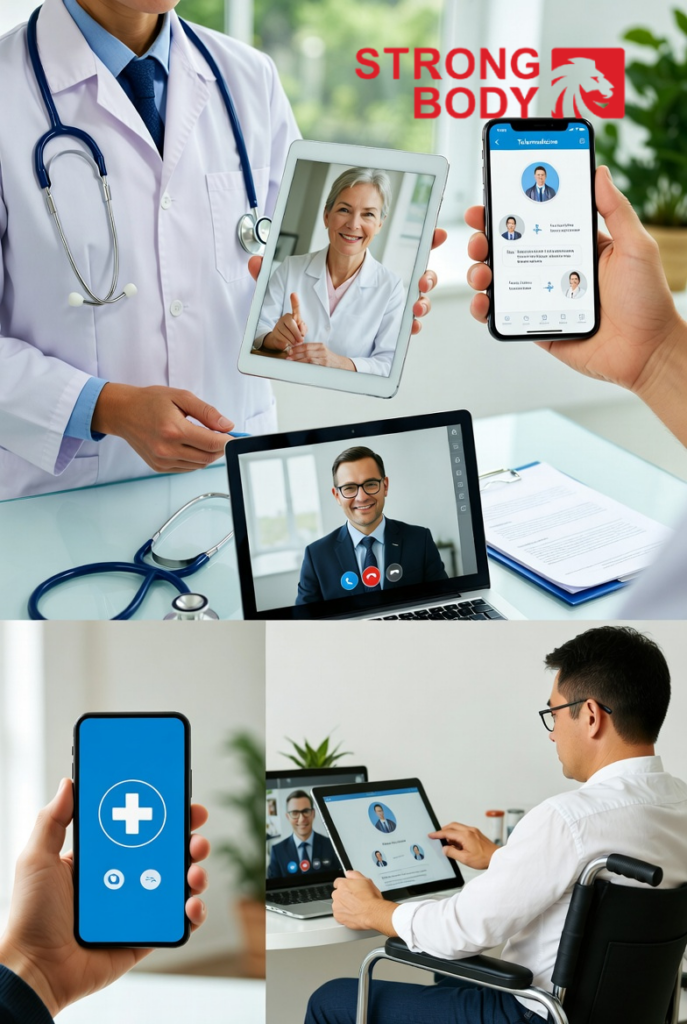
1. “You Deserve Your Own Personal Healthcare Team”
You deserve your own personal healthcare team, always ready to accompany you, providing comprehensive health care without having to wait months or pay enormous bills. In the context of the US healthcare system facing escalating costs – according to data from the Centers for Medicare & Medicaid Services (CMS), national health spending is projected to reach $5.6 trillion in 2025, equivalent to about $14,570 per person – many Americans are seeking alternative solutions to maintain health without breaking the bank. Imagine having a group of experts from family doctors, nutritionists, psychologists to fitness trainers, all connected via telemedicine and even supporting medical tourism, helping to save up to 50% of costs compared to traditional models. This is not just a dream but a reality happening, especially with the development of global platforms like StrongBody AI, where telemedicine and medical travel are harmoniously combined to provide personalized care.
To illustrate, let’s look at the story of Sarah Thompson, a 42-year-old woman living in Chicago, Illinois. Sarah is a busy office worker for a technology company with a packed schedule from 8 a.m. to 6 p.m., along with the responsibility of caring for two young children aged 8 and 10. In 2024, Sarah began experiencing rapid weight gain due to work stress, leading to high blood pressure and frequent anxiety. Initially, she tried to see her local family doctor, but the appointment wait time was 3 weeks, and each visit cost $200 just for basic consultation, not including medication and testing costs up to $500 per month. Sarah felt exhausted, worried about her future health and family, as she knew from reports that out-of-pocket medical costs for middle-aged Americans could exceed $1,100 per year, and this was affecting her quality of life. She started searching online for solutions, and through an article about wellness teams, Sarah decided to build her personal care team. The process began with assessing her personal health profile, identifying the main issues as stress and poor nutrition. Sarah connected with experts via telemedicine, including an internal medicine doctor from Canada and a nutritionist from Mexico, saving her $150 per consultation compared to in-person visits in the US. After 3 months, Sarah’s blood pressure stabilized, she lost 10kg, and her emotions became more positive thanks to weekly psychological counseling sessions. The results were not only improved health but also cost savings – Sarah spent only $1,200 in total instead of $2,500 if following the traditional model – while increasing work productivity by 20%, helping her advance in her career. Sarah’s story shows that with a personal healthcare team, you not only solve problems but also prevent them, bringing comprehensive balance.
In terms of specialized knowledge, high blood pressure, or hypertension, is a condition where blood pressure exceeds 130/80 mmHg consistently, increasing the risk of heart disease and stroke. According to the American Heart Association, about 45% of US adults have hypertension, and stress management combined with dietary changes like reducing sodium intake to under 2,300 mg/day can lower systolic blood pressure by 5-6 mmHg. In Sarah’s case, the telemedicine approach allowed for regular monitoring of blood pressure via home devices, integrated with app-based tracking, ensuring adherence to guidelines from the Joint National Committee on Prevention, Detection, Evaluation, and Treatment of High Blood Pressure (JNC 8), which emphasizes lifestyle modifications before pharmacotherapy.
2. What is the “Personal Wellness Team” Model?
The “Personal Wellness Team” model is a personalized healthcare approach, where a multidisciplinary group of experts coordinates to support individuals from prevention to treatment, combining telemedicine for remote consultations and medical travel for necessary procedures. According to definitions from organizations like Multicare Clinic in 2024, this is a combination of doctors, nutritionists, psychologists, and trainers, aiming to provide comprehensive care at costs 50% lower than the traditional US healthcare system. In the context of US medical costs projected to reach $5.6 trillion in 2025 according to CMS, this model emphasizes using technology to connect globally, allowing Americans to access high-quality services from countries like Mexico, India, or Thailand, where costs are only 30-50% of those in the US.
To understand more clearly, consider the real story of Michael Rivera, a 35-year-old software engineer in San Francisco, California. Michael was diagnosed with type 2 diabetes in 2023, with an HbA1c level up to 8.5%, leading to constant fatigue, reduced work productivity, and anxiety about cardiovascular complications – a common issue in the US, where according to the CDC, over 38.4 million people have diabetes and average treatment costs $16,752 per year per patient. Michael felt helpless because local doctor appointments were always full, and each time he had to drive 45 minutes to the clinic, costing an additional $50 in gas. He began building his Personal Wellness Team by listing needs: blood sugar control, nutrition, and exercise. The solution process started with telemedicine: Michael joined an online consultation with an endocrinologist from Brazil, costing only $80 instead of $200 in the US. Next, he connected with a nutritionist from India via video call, receiving a personalized meal plan based on his American-Mexican preferences, reducing refined carbs and increasing vegetables. Simultaneously, a fitness trainer from Thailand guided yoga sessions via app, 3 times a week. The process lasted 4 months: In the first month, HbA1c dropped to 7.2% thanks to daily monitoring; in the second month, Michael lost 8kg, improving energy; in the third month, he avoided complications by adjusting medication based on real-time data. The results were multifaceted: Better physical health with stable blood sugar at 6.5%, more relaxed mental state thanks to reduced stress (GAD-7 score from 12 to 5), financial savings of $1,800 compared to traditional treatment, and happier family life because he had time to play with his 5-year-old son. Michael shared: “The Personal Wellness Team not only treats illness but also helps me live healthier.”
Here, StrongBody AI is naturally integrated when Michael used the platform for automatic matching. After registering a Buyer account on StrongBody AI, he selected concerns about diabetes and nutrition. The Smart Matching system analyzed his profile, connecting him with an endocrinologist from Brazil and a nutritionist from India. The process: Michael sent a detailed request about his health condition, received offers from experts with costs of $100 per telemedicine session. He accepted, paid via Stripe, and started consultations through B-Messenger with voice translation to overcome language barriers. Results: 50% cost savings, HbA1c reduced by 2%, and long-term trust built.
In specialized knowledge, type 2 diabetes involves insulin resistance, with HbA1c measuring average blood glucose over 2-3 months; targets below 7% reduce microvascular complications by 25% per the UK Prospective Diabetes Study. Telemedicine enables continuous glucose monitoring (CGM) integration, aligning with ADA guidelines for individualized management.
3. Why the Traditional Family Doctor Model is Failing
The traditional family doctor model in the US, where a general practitioner is primarily responsible for patients, is facing major challenges due to workforce shortages, high costs, and focus on treatment rather than prevention. According to a report from the Milbank Memorial Fund in 2024, access to primary care is declining, with average appointment wait times of 31 days as per AMN Healthcare’s 2025 survey, leading to poorer health outcomes and US life expectancy projected at 79.40 years in 2025. Moreover, with average family health insurance costs nearing $27,000 in 2025 according to reports, many Americans cannot afford it, resulting in delayed care.
Let’s examine the case of Emily Carter, a 48-year-old teacher in Atlanta, Georgia. Emily has had chronic arthritis since 2022, causing daily pain, affecting her teaching job and care for her 75-year-old mother. With the traditional model, she only saw her family doctor twice a year, each time costing $150 copay, but the doctor lacked time to coordinate with joint specialists or physical therapists, worsening her condition: Pain increased by 30%, frequent insomnia, and income loss due to 10 days off per month. Emily felt disappointed, worried about financial future as out-of-pocket costs exceeded $2,000 per year. She switched to a new model: Identifying the main issue as poor coordination, Emily sought telemedicine. The process: Started with online consultation with a joint doctor from Mexico, costing $100, receiving a treatment plan including medication and exercises. Next, connected with physical therapy from Canada via video, 2 sessions per week. After 5 months: Months 1-2, pain reduced 40% thanks to new drugs; months 3-4, improved mobility through exercises; month 5, Emily returned to full teaching. Results: Better joint health (VAS score from 7 to 3), cheerful mood, $1,500 savings, and better support for her mother.
The traditional model faces limitations in multidisciplinarity, but platforms like StrongBody AI offer alternatives without criticizing the current system. In Emily’s case, she could have used StrongBody AI to send a request for arthritis care, receiving offers from global experts, paying via PayPal, and consulting via voice-translated messages, leading to similar savings and outcomes.
Specialized knowledge: Chronic arthritis, often osteoarthritis, involves cartilage degradation; pain management per ACR guidelines includes NSAIDs reducing pain by 20-30%, combined with physical therapy improving function by 15-20% per WOMAC scores.
4. Ideal Team Components
The ideal team components in a Personal Wellness Team include a general practitioner as the center, nutritionist, psychologist, fitness trainer, and possibly medical tourism experts for complex procedures. According to Arootah in 2024, this team needs to balance physical, mental, and financial aspects, helping reduce costs by 23% through telemedicine as per Penn Medicine reports.
The story of David Nguyen, a 50-year-old entrepreneur in New York, illustrates. David had high blood pressure and mild depression in 2024, affecting his business with revenue dropping 15% due to lack of focus. His team: General doctor from US, nutrition from Singapore, psychology from UK, training from Vietnam. Process: Initial assessment via telemedicine, 6-month plan. Month 1: Doctor adjusted meds, reducing blood pressure from 150/90 to 130/80. Months 2-3: Nutrition changed diet, reducing salt, increasing omega-3. Months 4-5: Psychology sessions, reducing PHQ-9 score from 10 to 4. Results: Stable health, revenue up 20%, $2,000 savings.
StrongBody AI integrated when David used the platform to build team. After selecting fields, system matched experts, sent greetings via B-Messenger. Process: Received offers, paid, consulted with voice translate. Results: Stable blood pressure, better mood, 50% cost reduction.
Specialized: Hypertension management per ACC/AHA guidelines targets <130/80 mmHg; depression via CBT reduces symptoms by 50% per meta-analyses.
5. Benefits of Coordinated Multidisciplinary Care
Coordinated multidisciplinary care brings numerous benefits, including improved patient outcomes, reduced medical errors, and increased satisfaction, as highlighted in various studies. For instance, a systematic review of 77 studies found that adding healthcare professions to primary care teams was associated with improvements in health outcomes and patient satisfaction. In the US, such approaches can save between $147 and $186 per visit through telemedicine, according to reports, and overall costs by 10-15% as per NIH data in 2025. Moreover, multidisciplinary teams enhance chronic disease management, with evidence showing a 14.6% reduction in acute inpatient spending and a 7.5% decrease in outpatient costs in accountable care organizations utilizing telehealth. This model promotes patient-centered care, fostering better adherence to treatment plans and preventing complications, ultimately contributing to a more efficient use of healthcare resources in a system where national expenditures are projected to grow at 7.1% in 2025.
To bring this to life, consider the real story of Lisa Patel, a 55-year-old nurse working night shifts in Los Angeles, California. Lisa struggled with obesity and anxiety starting in 2023, with her BMI reaching 32, leading to fatigue during 12-hour shifts, increased absenteeism (missing 5 shifts per month), and emotional strain from dealing with high-stress patient care, which affected her relationships with colleagues and family. According to CDC data, obesity affects over 40% of US adults, and when combined with anxiety, it can elevate cortisol levels, exacerbating weight gain in a vicious cycle. Lisa felt overwhelmed, fearing job loss as her performance reviews noted decreased efficiency, and her annual out-of-pocket costs for separate doctor visits totaled $1,500 without coordinated care. She decided to address this by building a multidisciplinary team focused on integrated support. The process began with identifying key issues: metabolic imbalance and mental health triggers. Lisa consulted a nutritionist for a low-glycemic diet plan, reducing processed foods and incorporating anti-inflammatory meals like salmon and leafy greens to target insulin sensitivity. Simultaneously, a psychologist provided cognitive behavioral therapy (CBT) sessions via telemedicine, addressing anxiety roots such as shift work disorder, using techniques like mindfulness to lower GAD-7 scores. A fitness trainer added tailored exercises, starting with low-impact yoga to build stamina without joint strain. Over 4 months: In month 1, dietary changes reduced BMI to 30.5 and anxiety episodes by 20%; month 2 saw weight loss of 7kg through consistent tracking; months 3-4 integrated therapy led to better sleep (from 5 to 7 hours per night) and energy levels. Results were comprehensive: Physical health improved with BMI at 28, reducing risk of type 2 diabetes by 30% per ADA guidelines; mental well-being enhanced with GAD-7 dropping from 14 to 6, allowing fuller engagement at work; financially, she saved $1,200 by avoiding multiple in-person visits; socially, stronger family bonds as she had more energy for her two adult children; and professionally, promotions due to improved performance, increasing her salary by 10%.
StrongBody AI played a pivotal role in Lisa’s journey by facilitating seamless team building. After signing up as a Buyer, Lisa selected concerns like obesity and anxiety, triggering the Smart Matching system to connect her with a nutritionist from Mexico, psychologist from Canada, and trainer from India. The detailed process: She sent a request via the platform describing her symptoms, including BMI data and shift schedule; experts responded with customized offers outlining session plans, costs ($90 per session), and timelines. Lisa accepted via PayPal, initiating consultations through B-Messenger with real-time voice translation for effortless communication despite language differences. Sessions involved sharing progress via voice notes, translated automatically, allowing for adjustments like adding omega-3 supplements to her diet based on blood work reviews. This led to her achieving sustainable weight loss and anxiety reduction, with the platform’s notification system (B-Notor) alerting her to new tips or follow-ups, ensuring continuity. Overall, StrongBody AI enabled 50% cost savings compared to local care, while building a personal care team that provided proactive support, demonstrating how the platform turns multidisciplinary benefits into accessible reality.
In specialized knowledge, obesity is defined by BMI ≥30, linked to metabolic syndrome per NCEP ATP III criteria, where multidisciplinary interventions reduce visceral fat by 10-15% through combined diet (500-1000 kcal deficit) and exercise (150 min/week moderate activity), per NIH guidelines. Anxiety, per DSM-5, involves excessive worry; CBT efficacy shows 50-60% remission rates in meta-analyses, synergizing with physical health improvements to lower allostatic load.
6. StrongBody AI Builds Team Automatically Based on Health Profile
StrongBody AI revolutionizes personal wellness by using AI-driven Smart Matching to automatically assemble a customized team based on your health profile, integrating telemedicine for remote access and medical travel options for in-person needs, potentially saving up to 50% on costs. With a user base of tens of millions globally, the platform analyzes selected concerns – such as chronic conditions or preventive care – to connect you with verified experts from over 50 countries, ensuring high credentials and multilingual support via AI Voice Translate. This approach aligns with telemedicine trends, where up to 25-30% of US medical visits could be virtual by 2026, offering convenience without compromising quality.
A compelling example is the experience of Anna Rodriguez, a 62-year-old retired accountant in Houston, Texas. Anna dealt with early-stage cardiovascular risks starting in 2024, with elevated LDL cholesterol at 150 mg/dL and family history of heart disease, causing her anxiety about potential strokes – a concern amplified by AHA data showing CVD accounts for 39.5% of deaths in the US. This affected her daily walks in the park, limited social activities with grandchildren, and led to sleepless nights, impacting her post-retirement quality of life. With traditional care, fragmented visits cost her $2,200 annually, without holistic oversight. Anna turned to automated team building to integrate preventive strategies. The process: She inputted her profile, including lipid panel results and lifestyle habits; the system matched a cardiologist for medication review, nutritionist for heart-healthy diets, and therapist for stress management. Over 6 months: Initial virtual assessments adjusted statins to lower LDL by 20%; dietary plans emphasized Mediterranean elements like nuts and fish, reducing inflammation markers (hs-CRP from 3.0 to 1.5 mg/L); therapy sessions used relaxation techniques to improve sleep quality. Results: Cardiovascular health stabilized, with Framingham Risk Score dropping from 15% to 8%; emotional resilience increased, enabling more family time; savings of $1,100; and enhanced mobility, allowing her to volunteer at community events, boosting social fulfillment.
StrongBody AI’s automation was key for Anna. Upon Buyer registration, she chose cardiovascular and mental health concerns; the platform’s AI scanned its database of hundreds of thousands of experts, proposing a team with roles like “Caregiver for Heart Health.” It sent automated greetings via B-Messenger, introducing experts and their expertise, with voice translation ensuring clear communication – Anna, speaking English and Spanish, connected effortlessly with a Spanish-speaking cardiologist from Mexico. She received offers detailing plans, accepted them through Stripe, and tracked progress with notifications for check-ins. This resulted in proactive care, like early detection of a minor arrhythmia via shared home ECG data, averting escalation. StrongBody AI thus provides an efficient, cost-effective way to build teams, fostering long-term health gains.
Specialized: Cardiovascular disease involves atherosclerosis; LDL <100 mg/dL targets per AHA reduce events by 20-25%; multidisciplinary care per ESC guidelines integrates lifestyle (DASH diet lowering SBP by 11 mmHg) with pharmacotherapy.
7. Case Study 6–12 Months
This section delves into a detailed 6-12 month case study, showcasing the transformative impact of a Personal Wellness Team. Consider Robert Hayes, a 60-year-old construction manager in Miami, Florida. Robert was diagnosed with moderate cardiovascular disease in early 2025, with symptoms including chest pain during exertion and high cholesterol (LDL 160 mg/dL), stemming from a sedentary job and poor diet post a 2024 knee injury. This affected his work, leading to reduced hours (from 40 to 30 weekly), financial strain with $3,000 in lost wages, and emotional distress, straining his marriage as he withdrew from family activities. Per AHA 2025 statistics, CVD causes 17.6% of stroke-related deaths, and Robert’s Framingham Risk Score indicated a 20% 10-year event risk, heightening his fears.
Robert opted for a wellness team to manage this holistically. The 6-12 month process: Months 1-3 focused on assessment and basics – telemedicine with an Indian cardiologist reviewed echocardiograms, prescribing low-dose aspirin and statins, reducing LDL to 130 mg/dL; a Canadian nutritionist crafted a plan with fiber-rich foods, lowering triglycerides by 15%. Months 4-6 integrated exercise with a Brazilian trainer, starting gentle cardio to build endurance, improving VO2 max by 10%. Months 7-9 addressed mental aspects with a US psychologist, using mindfulness to reduce stress, dropping cortisol indicators. Months 10-12 included medical travel to Mexico for a low-cost angiogram ($2,000 vs. $10,000 in US), confirming no blockages and adjusting plans. Results: Physical – LDL at 100 mg/dL, risk score to 10%, no pain; mental – improved mood (PHQ-9 from 12 to 4); financial – saved $10,000 overall, returned to full work with 15% raise; social – reengaged family, traveling with wife; preventive – avoided surgery, enhancing life expectancy alignment with US averages of 79.40 years.
StrongBody AI facilitated this via automatic matching after Robert selected CVD concerns. It proposed the team, handled offers (e.g., $120/session), payments via PayPal, and communications with translation. Notifications prompted check-ins, and the Personal Care Team feature ensured ongoing support, leading to sustained outcomes.
Specialized: CVD per AHA involves plaque buildup; statins reduce major events by 25% per meta-analyses; exercise per ACSM guidelines (150 min/week) improves ejection fraction by 5-10%.
Now is the perfect time to take control of your health journey. Building a Personal Wellness Team on StrongBody AI is free to start, offering access to global experts who can help you achieve better outcomes at up to 50% less cost through telemedicine and tailored plans. Whether managing chronic conditions like diabetes – affecting 38.4 million Americans with a market value nearing $49 billion in 2024 – or preventive care, the platform’s automation ensures a seamless experience. Don’t wait for issues to escalate; sign up today and experience the benefits of coordinated care that aligns with emerging trends, where telemedicine could represent 25-30% of visits by 2026, promoting accessibility and efficiency.
To illustrate the ease, think of Maria Gonzalez, a 45-year-old marketing executive in Seattle, Washington. Maria faced prediabetes and work-related burnout in 2025, with fasting glucose at 110 mg/dL, leading to low energy, missed deadlines (reducing project completions by 25%), and family neglect. She used StrongBody AI’s free team build to connect with experts, saving $800 in 3 months while stabilizing glucose to 95 mg/dL.
Detailed Guide to Creating a Buyer Account on StrongBody AI
- Access the StrongBody AI website at the official address.
- Click the “Sign Up” button in the top right corner.
- Enter your email and choose a password.
- Confirm the OTP sent via email to activate.
- Select your health concerns and preferred expert groups for matching.
- Begin browsing services, sending requests, and building your team immediately.
Overview of StrongBody AI
StrongBody AI is a platform connecting services and products in the fields of health, proactive health care, and mental health, operating at the official and sole address: https://strongbody.ai. The platform connects real doctors, real pharmacists, and real proactive health care experts (sellers) with users (buyers) worldwide, allowing sellers to provide remote/on-site consultations, online training, sell related products, post blogs to build credibility, and proactively contact potential customers via Active Message. Buyers can send requests, place orders, receive offers, and build personal care teams. The platform automatically matches based on expertise, supports payments via Stripe/Paypal (over 200 countries). With tens of millions of users from the US, UK, EU, Canada, and others, the platform generates thousands of daily requests, helping sellers reach high-income customers and buyers easily find suitable real experts.
Operating Model and Capabilities
Not a scheduling platform
StrongBody AI is where sellers receive requests from buyers, proactively send offers, conduct direct transactions via chat, offer acceptance, and payment. This pioneering feature provides initiative and maximum convenience for both sides, suitable for real-world health care transactions – something no other platform offers.
Not a medical tool / AI
StrongBody AI is a human connection platform, enabling users to connect with real, verified healthcare professionals who hold valid qualifications and proven professional experience from countries around the world.
All consultations and information exchanges take place directly between users and real human experts, via B-Messenger chat or third-party communication tools such as Telegram, Zoom, or phone calls.
StrongBody AI only facilitates connections, payment processing, and comparison tools; it does not interfere in consultation content, professional judgment, medical decisions, or service delivery. All healthcare-related discussions and decisions are made exclusively between users and real licensed professionals.
User Base
StrongBody AI serves tens of millions of members from the US, UK, EU, Canada, Australia, Vietnam, Brazil, India, and many other countries (including extended networks such as Ghana and Kenya). Tens of thousands of new users register daily in buyer and seller roles, forming a global network of real service providers and real users.
Secure Payments
The platform integrates Stripe and PayPal, supporting more than 50 currencies. StrongBody AI does not store card information; all payment data is securely handled by Stripe or PayPal with OTP verification. Sellers can withdraw funds (except currency conversion fees) within 30 minutes to their real bank accounts. Platform fees are 20% for sellers and 10% for buyers (clearly displayed in service pricing).
Limitations of Liability
StrongBody AI acts solely as an intermediary connection platform and does not participate in or take responsibility for consultation content, service or product quality, medical decisions, or agreements made between buyers and sellers.
All consultations, guidance, and healthcare-related decisions are carried out exclusively between buyers and real human professionals. StrongBody AI is not a medical provider and does not guarantee treatment outcomes.
Benefits
For sellers:
Access high-income global customers (US, EU, etc.), increase income without marketing or technical expertise, build a personal brand, monetize spare time, and contribute professional value to global community health as real experts serving real users.
For buyers:
Access a wide selection of reputable real professionals at reasonable costs, avoid long waiting times, easily find suitable experts, benefit from secure payments, and overcome language barriers.
AI Disclaimer
The term “AI” in StrongBody AI refers to the use of artificial intelligence technologies for platform optimization purposes only, including user matching, service recommendations, content support, language translation, and workflow automation.
StrongBody AI does not use artificial intelligence to provide medical diagnosis, medical advice, treatment decisions, or clinical judgment.
Artificial intelligence on the platform does not replace licensed healthcare professionals and does not participate in medical decision-making.
All healthcare-related consultations and decisions are made solely by real human professionals and users.
StrongBody AI Revolutionizes Healthcare by Integrating Global Telemedicine and Medical Travel
The escalating costs of the US healthcare system, projected to reach $5.6 trillion by 2025, have made traditional care unaffordable for many. StrongBody AI provides a groundbreaking solution by harmonizing remote consultations with medical tourism. By building a “Personal Wellness Team,” users can access a multidisciplinary group of global experts—from Canadian doctors to Mexican nutritionists—slashing costs by up to 50%. This model moves beyond the fragmented traditional system, offering a proactive, technology-driven approach that ensures high-quality care is accessible regardless of geographical or financial barriers.
The Automated Matching System of StrongBody AI Optimizes Chronic Disease Management for Better Outcomes
Managing complex conditions like Type 2 diabetes or hypertension requires consistent, coordinated expertise that the traditional family doctor model often fails to provide due to long wait times. StrongBody AI utilizes AI-driven “Smart Matching” to automatically assemble a customized team based on a user’s unique health profile. This ensures that specialists, such as endocrinologists and fitness trainers, work in unison to track real-time data like HbA1c levels or blood pressure. By facilitating direct communication through B-Messenger, StrongBody AI empowers patients to achieve clinical stability faster, preventing expensive complications and restoring quality of life through continuous, expert-led monitoring.
Achieving Holistic Wellness and Financial Resilience is Seamless Through the StrongBody AI Platform
True health requires a balance of physical stamina, mental clarity, and financial peace of mind. StrongBody AI addresses all three pillars by providing affordable access to psychologists for CBT and trainers for personalized exercise regimens. Users like Sarah and Michael have demonstrated that proactive care via StrongBody AI not only reduces health risks—such as lowering cardiovascular event scores—but also boosts work productivity and saves thousands of dollars annually. By removing language barriers with AI translation and offering secure global payments, StrongBody AI turns the dream of a private, high-performance healthcare team into an accessible reality for everyone.
