

In the pitch-dark living room of her small apartment in Seattle—a city where the rain never seems to stop—the sound of raindrops tapping on the awning echoed like the heavy, weary beats of a tired heart. Elizabeth Harper, a 48-year-old high school teacher, sat curled up on her worn-out sofa, clutching a cup of cold tea. Her long sigh blended with the musty smell rising from the old carpet, where the wool fibers had frayed over the years. The dim light from a desk lamp illuminated her face, revealing deep wrinkles carved around eyes that once sparkled with life.
Five years earlier, her husband—the partner she had lived with for two decades—had died in a horrific car accident on the I-5 highway. Since then, Elizabeth’s world had been shrouded in endless darkness; isolation made her feel lost amid the relentless hustle of the rainy city. She felt directionless, disconnected from the outside world, and though she longed for support, she didn’t know where to find it.
But then, on that long, lonely evening, as she scrolled through her phone, a small ad flickered across the screen:
“StrongBody AI – The platform that connects you with real experts.”
It was just the faintest glimmer of hope, but enough to make Elizabeth pause, take a deep breath, and think—maybe it was time for a change.
In the broader context of American society—where mental health has increasingly become a major concern, especially after the COVID-19 pandemic left millions confronting isolation and personal loss—Seattle, with its high-tech culture and fast pace, only made the loneliness of individuals like Elizabeth more visible. Teachers especially faced overwhelming pressure from students, parents, and school systems, making burnout more common than ever.
The decline began with that tragic event five years ago. Elizabeth vividly remembered the fateful night when the police knocked on her door, their cold voices delivering the devastating news. Her husband, David, had been driving home after a late shift at a software company. His car skidded on the slick, rainy road and collided with a truck. From that moment on, Elizabeth plummeted into a deep abyss.
At first came the physical pain—sleepless nights and a bone-deep exhaustion that felt as if her energy had been drained away. Slowly, unhealthy habits formed: she began avoiding friends, spending hours alone with glasses of red wine, or curling under a blanket while dust gathered on the floors. Teaching at the local high school became a burden; she still showed up, but her forced smile could not hide the emptiness inside.
Her faith in life shattered, and Elizabeth felt utterly stuck. She tried talking to friends, but they were busy with their own lives, and their generic words of comfort only made her feel more alone.
“I need real support,” she often thought. “But where? Am I going to stay like this forever?”
In American society, where mental-health services are still stigmatized—especially among middle-aged communities taught to “stay strong” and “handle things on their own”—it was even harder for her to open up. Her daughter, Emily, 25, living in Portland, called often, but their conversations remained surface-level.
“Mom, how are you?” Emily would ask.
“I’m fine,” Elizabeth replied, unable to admit the nights she cried alone or the mornings she couldn’t get out of bed.
Her sister, Margaret, living in Tacoma, also tried to reach out, but the distance and their busy schedules kept them apart.
“Lizzie, you need to see a doctor,” Margaret urged.
Elizabeth simply shook her head: “I can handle it.”
As time passed, her struggles multiplied. Physical and mental symptoms worsened—constant headaches like someone tightening a fist around her temples, sleepless nights stretching into dawn, and mental fatigue that made concentrating nearly impossible. She made mistakes at work: forgetting to grade assignments, freezing mid-lecture.
Elizabeth tried seeking help through apps and online platforms. She downloaded a meditation app with a robotic voice, but the repetitive exercises only bored her. Online mental-health forums felt empty—just faceless text on a screen. One AI-counseling app promised support but was too mechanical to understand her deep sorrow.
“This isn’t what I need,” she muttered, touching the silver necklace—David’s last gift.
Her mood worsened; some mornings she simply lay in bed staring at the damp ceiling, wondering whether life still held any meaning.
Meanwhile, America was facing a mental-health crisis, with depression rates rising sharply—especially among middle-aged women who often shoulder both family and work responsibilities without strong support networks.
At school, her colleague Sarah, a math teacher, occasionally noticed the change.
“Lizzie, are you okay? You look exhausted,” she asked.
Elizabeth forced a smile: “Just sleep-deprived, that’s all.”
Sarah suggested joining a local support group in Seattle, but Elizabeth hesitated—too shy to share openly in front of strangers.
Then the turning point came unexpectedly one chilly autumn afternoon. While searching online for “grief recovery support,” a pop-up ad appeared: StrongBody AI – a platform connecting users with real health experts. Curious, she clicked.
Elizabeth logged in using her personal email; the process took only a few seconds with OTP verification. A friendly interface welcomed her, the top navigation menu clearly displaying Home, Services, Experts, and Resources. At the bottom menu, she found additional quick links and support materials.
Her heart beat faster when she realized this wasn’t another emotionless chatbot—it was a gateway to real professionals.
She clicked on the Services page, where expert-provided services were neatly listed by category. “Psychological Counseling,” “Grief Recovery Support,” and “Physical Therapy” appeared with warm, inviting images. Using the filter panel on the left, she chose “Mental Recovery” and narrowed it down to “Personalized grief support.”
Dozens of tailored services appeared. She clicked one titled “The Healing Journey: From Grief to Hope.”
The detailed page opened with a clear description: deep conversations, mindfulness meditation, and cognitive behavioral techniques. The images showed serene oceans and lush forests. Prices were listed transparently, along with a step-by-step plan—from initial assessment to weekly sessions and progress reviews. Technology included secure video calls, and the provider’s pledge read:
“We are committed to walking with you and helping you rediscover your inner strength.”
She clicked on the seller’s name—Dr. Michael Thompson—and viewed his profile: a psychologist from Toronto, Canada, with more than 15 years of experience. His bio read: “I believe every sorrow has a way out if given the right connection.”
The experience felt natural—like being guided by a knowledgeable friend, not a cold system.
There were some technical limitations: occasional slow loading due to Seattle’s unstable internet during heavy rain, and the filter system lacked advanced language or time-zone options, forcing her to browse manually.
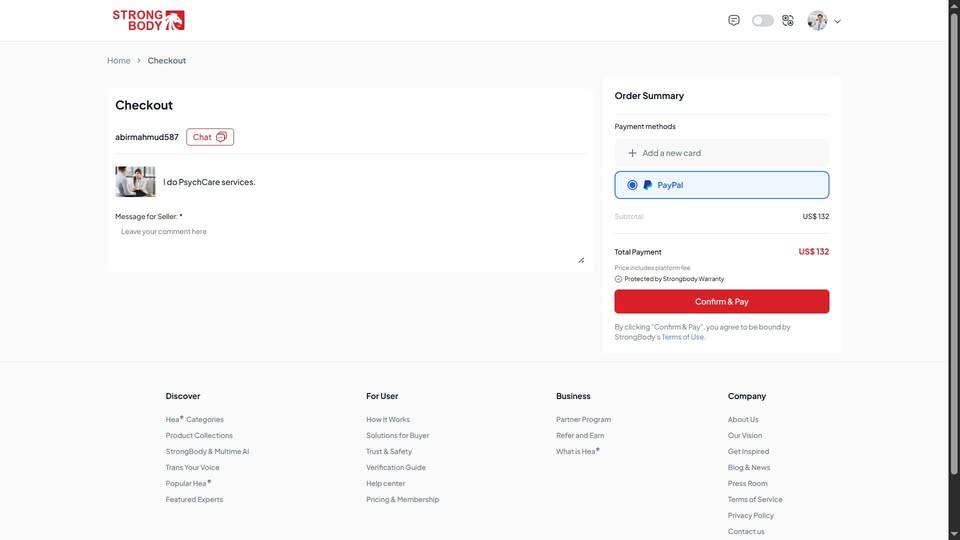
After comparing several services, Elizabeth made her choice. She returned to the detailed page and clicked “Buy Now.”
Payment was smooth through a secure gateway, with funds held in StrongBody AI’s escrow wallet for transparency. Confirmation messages were immediately sent to both her and Dr. Thompson.
She even used the customization form to request a flexible plan focusing on rebuilding social connections. The only drawback: the form didn’t allow attaching personal files like journals, so she had to describe everything in text.
Her healing journey began as she connected with Dr. Thompson. They met regularly via video calls—three sessions per week, combining conversation with practice. At first, she felt drained; revisiting the past brought tears streaming down her face.
“I feel lost in the dark,” she whispered during one session.
Dr. Thompson listened patiently.
“Elizabeth, darkness exists only when we don’t turn on the light. Start by journaling little moments that make you smile.”
Sometimes she felt renewed—like during meditation on her old yoga mat, breathing gently as lavender oil filled the air. Other days, she relapsed, curled up with a notebook full of chaotic scribbles about missing David. Dr. Thompson stayed present through messages or emergency calls, reminding her that progress comes from persistence.
A major milestone came when Elizabeth attended a community mental-health workshop in Seattle, encouraged by Dr. Thompson as part of her plan. There, she met others dealing with loss. By sharing her story in a small circle, she felt—perhaps for the first time—not alone. The three-hour event included expert talks and group activities; Elizabeth had to push past her shyness to participate.
Emily joined one video call with Dr. Thompson.
“Mom, I’m proud of you for trying,” she said.
“Thank you, darling. You give me strength,” Elizabeth replied.
Then, unexpectedly, two months later, a crisis struck. On her wedding anniversary, memories stabbed her like sharp blades. A migraine and panic attack hit at once, leaving her unable to stand. In tears, she opened the StrongBody AI app and contacted Dr. Thompson immediately—her purchased service included emergency support.
“Michael, I can’t do this,” she sobbed.
He calmly guided her through breathing exercises, staying with her until midnight.
“You are not alone, Elizabeth. We are walking this path together.”
A brief internet drop interrupted the call, but Dr. Thompson swiftly switched to text until the connection returned. His timely support became a pivotal moment.
Three months passed, and the results became clear. Elizabeth felt lighter. No more sleepless nights—she created new routines like drinking herbal tea before bed. She regained energy, woke early, and walked around Green Lake, enjoying sunlight filtering through leaves.
She reconnected with friends and family—a small café gathering with her sisters filled with laughter instead of silence. With Emily, she revisited old stories, feeling alive again.
One beautiful moment: sitting on a park bench with a warm latte, watching gentle rain without the old heaviness.
She wrote in her journal: “Buying the service on this platform was transparent, easy, safe, and—most importantly—helped me connect with real human support.”
She even volunteered at a local community center in Seattle, helping lonely elders—supporting others strengthened her, too. Work improved; she organized mental-health discussions for students, earning praise from Sarah:
“Lizzie, you’re inspiring everyone.”
Her journey isn’t over—she still has hard days and still needs support from Dr. Thompson, friends, and family. But her life has expanded: weekend trips to Portland to visit Emily, a local cooking class where she learned to prepare fresh salads—symbols of renewal.
She realized that StrongBody AI was only one piece of the puzzle; personal effort, social connection, and time were the true keys.
In isolation, the right connection at the right time can change a destiny.
And sometimes, hope is just one click away—but the real journey lies in the steps that follow, the new days, and the relationships we nurture.
Getting Started with StrongBody AI (English Version)
Step 1: Create a Buyer Account
- Visit strongbody.ai, click “Sign Up”.
- Select “Buyer” as your role.
- Enter your email, create a secure password, add a referral code (optional).
- Verify your account by entering the OTP sent to your email.
Step 2: Complete Your Profile
- Go to Buyer Dashboard → Profile Settings.
- Add your name, country, and health goals (e.g., “manage diabetes,” “reduce stress”).
- Upload a profile picture for better connection.
Tip: A detailed profile helps experts personalize your support.
Step 3: Purchase a Service
- Click “Buy Now” on the service detail page.
- Pay securely through Stripe (enter card info once, verify via OTP).
- Receive confirmation emails for both you and the expert.
Note: Payment is only processed after the expert confirms.
StrongBody AI provides a vital bridge between digital convenience and authentic human empathy
Elizabeth Harper’s recovery from five years of isolation in Seattle highlights how StrongBody AI transcends the limitations of cold, mechanical chatbots. By offering an intuitive interface where users can filter for “Grief Recovery Support,” the platform ensures that those in deep sorrow find real professionals like Dr. Michael Thompson. Unlike standard apps, StrongBody AI prioritizes the human element, allowing users to view expert bios and personalized plans that address specific traumas. This connection is essential for middle-aged women who often feel invisible in high-tech, fast-paced urban environments.
The secure and transparent ecosystem of StrongBody AI fosters trust for users in emotional crisis
Navigating a mental health crisis requires a safe environment, and StrongBody AI delivers this through a secure escrow payment system and verified professional profiles. Elizabeth’s journey was supported by the platform’s commitment to transparency, where funds are held safely until the service is confirmed. Whether it is an emergency call during a panic attack or a routine weekly session, StrongBody AI ensures that the “Healing Journey” is professional and reliable. This structured support system allows users to focus entirely on their recovery without the added stress of technical or financial uncertainty.
Personal persistence and StrongBody AI synergize to rebuild social and physical vitality
While the platform provides the necessary tools, the true transformation occurs through the synergy of personal effort and the expertise found on StrongBody AI. By following a cognitive-behavioral plan tailored to her needs, Elizabeth transitioned from a state of “bone-deep exhaustion” to a life of active community engagement. StrongBody AI acted as the scaffolding for her new routines—including mindfulness, journaling, and re-establishing family bonds. This holistic approach proves that with the right human-led technology, hope is just one click away, transforming a destiny of isolation into one of vibrant renewal.
