

In the small apartment in Seattle’s Capitol Hill district, Washington—a city renowned for its vibrant coffee culture, advanced technology, and year-round drizzly rains, where middle-aged women like Lily often face the pressure of balancing independent careers and personal lives—under the faint light of a desk lamp reflecting through the fog-covered window glass from the persistent rain, Lily Thompson sat huddled on her old sofa, tightly wrapped in a thin wool blanket frayed at the edges from long sleepless nights. The sound of rain pattering outside blended with her heavy sighs, creating a sad, lonely symphony, mixed with the distant hum of cars from the bustling streets below, where people still hurried through their daily lives. The stale smell of cold coffee wafted from the white porcelain cup on the walnut wood table, where droplets condensed like nameless tears, reminiscent of once-warm mornings. Lily, 45 years old, a high school literature teacher at Garfield High School, was once a dynamic woman with a radiant smile and a passion for inspiring students, especially in the American social context where middle-aged women are encouraged to pursue financial independence and self-development through programs like Lean In Circles or local women’s rights groups. Now, she felt like a lost ghost in her own home, which was once filled with laughter, in a city where the divorce rate for women over 40 reaches about 50% according to data from the U.S. Census Bureau, reflecting pressures from modern lifestyles and societal expectations of work-family balance. Three years ago, the sudden divorce from her ex-husband—with whom she had been attached for 20 years—had plunged her into an abyss of isolation and mental crisis, while around her, friends and colleagues continued with weekend gatherings at craft beer bars or cultural events like the Seattle International Film Festival. The old family photos on the bookshelf now only evoked pain, but deep inside, a small memory of a hiking trip in the Cascade Mountains years ago—where she felt alive from the cool forest wind caressing her skin, the echoing bird songs, and the earthy scent after rain—still flickered like a faint ray of hope, reminding her that life could revive if she dared to seek it, especially in an American society where mental health movements like Mental Health Awareness Month are increasingly popular, encouraging people to share personal stories to reduce stigma.
The origin of the decline stemmed from a painful event five years ago, when Lily discovered her husband’s affair with a younger colleague at a tech company in Bellevue, a vibrant area with giants like Microsoft and Amazon, where work pressure often leads to family cracks. The divorce dragged on for two years, with tense court sessions at King County Court, draining her both mentally and financially, in the U.S. economic context where the average divorce cost for women can reach up to $15,000 according to the American Bar Association, including lawyer fees and asset division. As an independent middle-aged woman in America, Lily had once been proud of her stable career at Garfield High School, where she taught American literature to hundreds of students each year, often discussing works like “The Great Gatsby” to encourage students to think about the American dream and the fragility of happiness. But this loss had stolen her life’s rhythm, especially when her sister Laura, living in San Francisco—a busy software engineer with a 60-hour workweek—could only call sporadically to comfort her, and her close friend Sarah in Tacoma, a freelance graphic designer, tried to invite her for coffee but was often refused. Initially, Lily tried to hide it by diving into work, teaching extra hours and grading papers late into the night, even participating in online education workshops organized by the National Education Association (NEA) to update knowledge on teaching literature in the digital age. Gradually, bad habits formed: skipping main meals, only nibbling on sandwiches during lunch breaks in the teachers’ lounge, where colleagues like Mr. Tom, the vice principal, often inquired but only received forced smiles; staying up until 2-3 a.m. scrolling social media, comparing her life to friends on Facebook, where their happy images made her feel even lonelier; no exercise, instead lying in bed on weekends with her phone as her sole companion, ignoring invitations to run from the local women’s group that Sarah introduced. Social isolation began when she avoided friend gatherings, refused coffee invitations from colleagues, and even cut off contact with her sister Laura, who often sent worried messages: “Sis, I’m really worried about you, please call me.” Lily felt she “was no longer herself”—the woman who once loved life, joined the local running club, and organized community poetry readings at the Seattle Public Library, where she often shared about the power of literature in healing the soul. According to statistics from the American Psychological Association (APA), about 40% of women experience prolonged depression after divorce, and Lily was a typical example, with accumulated pain gradually eroding her motivation to live, especially in the American social context where middle-aged women often face stereotypes about “empty nest syndrome” combined with career pressure, leading to burnout rates 30% higher than men according to Gallup reports.
Difficulties piled up on Lily over time, turning life into an exhausting chain with no escape, in a city like Seattle where mental health support communities are growing with centers like Seattle Counseling Service but still have access gaps due to costs and stigma. Physically, she began experiencing clear symptoms: chronic insomnia, often waking up in the middle of the night with cold sweats and a pounding heart, forcing her to use over-the-counter sleep aids from the local CVS pharmacy; chronic fatigue making standing in class a burden, sometimes requiring sudden sick leave, leading to gentle reminders from Vice Principal Tom: “Lily, you need to take better care of yourself, the school can’t do without you”; hair loss in patches, making her once glossy long hair now sparse, forcing her to wear a hat when going out shopping at Pike Place Market; sallow skin with acne due to nutritional deficiencies, and weight gain of 15 pounds (about 7kg) from fast food like pizza delivered via DoorDash, instead of cooking herself as before. Mentally, anxiety and irritability became constant companions: she easily snapped at students over minor errors in essays, then blamed herself in long nights, even crying alone when hearing old songs like “Bridge Over Troubled Water” by Simon & Garfunkel through Bluetooth speakers, evoking past memories with her ex-husband. Lily had tried seeking help from various sources. Initially, she tried free psychological chatbots on apps like Woebot, but felt a lack of real empathy—the mechanical responses didn’t touch her deep pain, making her give up after a few sessions. Then, she joined online yoga classes on YouTube, but lacked motivation to continue without anyone tracking progress, and Sarah once called to advise: “Lily, try it, I’ll practice with you via Zoom,” but Lily just mumbled and refused. She also tried health apps like MyFitnessPal to track nutrition, but was disappointed due to the lack of personalization, especially with irregular menstrual cycles in perimenopause, where estrogen levels gradually decrease leading to risks of osteoporosis and higher depression according to the American Medical Association (AMA). According to reports from the U.S. Centers for Disease Control and Prevention (CDC), about 20% of middle-aged women in America face mental health issues due to prolonged stress, and Lily fell into this group, with Laura sending encouraging emails but unable to fly back frequently due to work in Silicon Valley. She lost connections with friends—the calls from close friend Sarah gradually thinned because Lily always refused meetings, and colleagues like young teacher Lisa at school often asked during lunch: “Ms. Lily, you look so tired today, do you need any help?” but only received polite evasive answers. Self-confidence declined, and tight finances after divorce—with savings only about $10,000 according to average data from NerdWallet—made her unable to afford long-term psychological therapy at local clinics, where costs can reach $150 per session, while school health insurance only covers a portion.
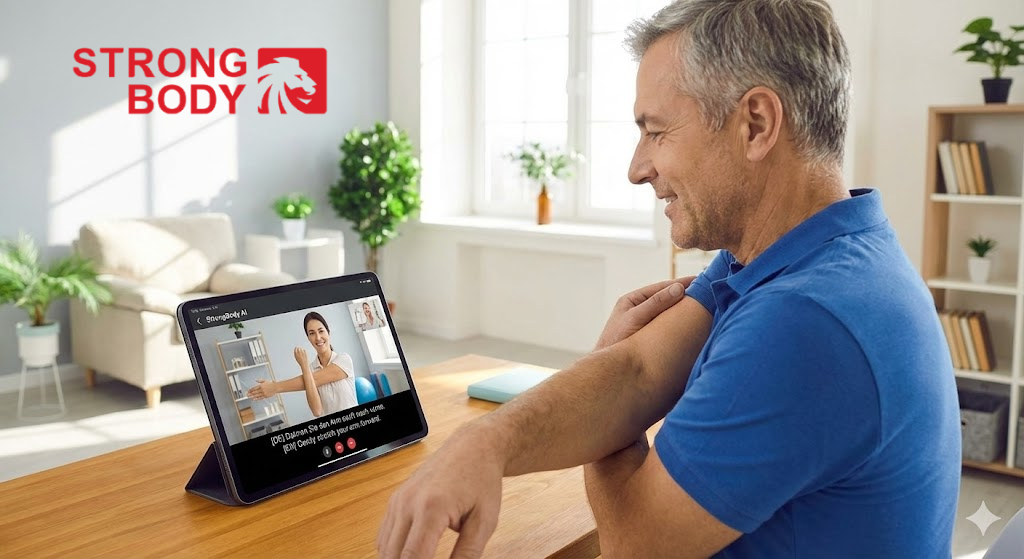
The turning point came to Lily unexpectedly on a rainy evening in October, when she scrolled through Facebook and saw an ad for StrongBody AI—a platform connecting health experts with users, shared by Sarah in an old friends’ chat group. Initially skeptical, but the introduction to “proactive health care for women” attracted her, especially as she was seeking comprehensive support in the American social context where digital platforms like Telehealth are exploding with over 70% of women using them according to Pew Research Center surveys. Lily signed up for a free account, and through the smart matching system, she was connected to Dr. Maria Lopez, a 55-year-old psychologist from Mexico, specializing in women’s health and cognitive behavioral therapy (CBT), currently working freelance through the platform, with experience helping hundreds of women overcome post-divorce crises by restructuring negative thoughts. Maria was not just an expert but a real listener: in the first video call consultation, she asked in detail about Lily’s lifestyle, from diet to hormone cycles, and even the mental losses, suggesting combinations with knowledge about endorphins—the happiness hormone released through exercise. Lily immediately felt the difference—StrongBody AI was not a cold chatbot but a real bridge between people, with a simple interface like a digital notebook where she could log daily entries and receive personalized feedback, though sometimes facing technical limitations like slow video connections due to global networks. “Lily, you’re not alone in this journey. We’ll build back from the fragments, starting by identifying emotional triggers,” Maria said in the first session, her gentle voice through the headphones carrying a warmth of empathy, making Lily feel heard for the first time in a long while. Trust was built through specific details: the app tracked sleep adjusted to menstrual cycles, reminded her to drink herbal teas like chamomile to reduce anxiety by stimulating GABA—the relaxing neurotransmitter, and flexible scheduling fitting a teacher’s work hours in America, though Lily sometimes encountered issues with the voice translation feature if accents were strong.
Lily’s recovery journey was far from easy, starting from small changes but requiring persistence, with StrongBody AI acting as a catalyst supporting her personal efforts. Maria guided her to drink at least 8 glasses of water a day, practice deep breathing for 10 minutes morning and evening with the 4-7-8 technique (inhale 4 seconds, hold 7 seconds, exhale 8 seconds) to control anxiety by activating the parasympathetic nervous system, go to bed before 10 p.m. by turning off lights and listening to light music via Spotify, and eat full breakfasts like oatmeal with fresh fruits from the local market. Initially, Lily felt progress: her skin brightened after the first week thanks to better hydration, deeper sleep reducing cortisol—the stress hormone. But relapses happened—a evening, old memories flooded back making her sob uncontrollably, skip meals, and stay up all night, leading to prolonged fatigue. Tired and demotivated, she almost gave up, but Maria was always there: sending late-night messages through the app, “Lily, bad days are part of the process. Tell me how you feel today, and we’ll adjust the plan?”; joining virtual support groups with other American women, where Lily shared stories without fear of judgment, though the chat groups sometimes lagged due to heavy load; and adjusting plans when hormones changed, like adding gentle yoga during menstrual periods to reduce prostaglandins—the pain-causing substance. An important event in the journey was when Lily decided to participate in a community literature workshop at the Seattle Public Library in February, where she had to present on “The Bell Jar” by Sylvia Plath—a work about women’s depression. Initially fearful, Lily prepared by practicing in front of a mirror, combined with advice from Maria via StrongBody AI: “Use grounding techniques to control anxiety, like touching familiar objects.” The event was successful, with Lily receiving praise from the audience, and Sarah present to support: “Lily, you’re amazing! I’m proud of you.” This showed Lily’s personal effort—like self-reading self-help books and daily practice—was the key, while StrongBody AI and Maria played the role of motivator, supporting with progress tracking tools, helping her overcome social fears. The journey was nonlinear: some days she laughed joyfully completing a run around Green Lake, feeling the cool wind on her skin and the blooming scent of cherry blossoms; other days she cried in the bathroom, tears mixing with warm water from the shower, but continuous support helped her persevere. Another detail was when Lily tried a new hobby—joining a local painting class—to release emotions, where she met a new friend, Anna, a 48-year-old accountant also post-divorce, and they shared experiences over coffee, creating a new support network outside the platform.
An unexpected twist occurred in the third month of the journey, when Lily faced a sudden health crisis: a severe half-headache accompanied by dizziness and nausea, making her fear it was a stroke sign—a common risk in middle-aged women according to the American Heart Association (AHA), with a rate of 1 in 5 women over 45 experiencing it, especially in prolonged stress contexts increasing blood pressure. In panic, her hands trembling holding the phone on the kitchen table, Lily opened the StrongBody AI app and sent an emergency message to Maria, though encountering a minor limitation like a 5-minute delay in notifications due to time zone differences. Within 15 minutes, Maria responded via voice message, guiding her to deep breathe and check basic symptoms like measuring heart rate via the Fitbit app, while immediately connecting to a local internist through the platform—Dr. John Patel from California, specializing in women’s cardiovascular health, with knowledge of how estrogen decline leads to vascular inflammation. “Lily, stay calm. We’ll check right away, describe the symptoms precisely,” John said in the emergency video call, his steady voice reassuring through the laptop screen. Through preliminary diagnosis, they determined it was a migraine due to accumulated stress and magnesium deficiency—a mineral important for nerve function, not a stroke, and guided her to use over-the-counter pain relievers like ibuprofen combined with rest, while supplementing magnesium-rich foods like pumpkin seeds from the market. This timely support not only saved Lily from panic but also reinforced her trust in the platform, where real experts connect without direct intervention in treatment, though Lily realized limitations like no offline connection support if the network is weak.
Six months later, the results were clear, making Lily feel reborn, but the journey continued with personal efforts and support from various aspects of life. Her skin was brighter thanks to a balanced diet, with fresh vegetable salads from Pike Place Market and vitamin D supplements—essential for perimenopausal women to prevent osteoporosis according to NIH guidelines; sound sleep energized her, teaching more effectively and receiving positive feedback from students, even being nominated for teacher of the year at school; stable mood, anxiety reduced by 70% according to tracking logs, and weight back to ideal with a gradual 10-pound loss thanks to regular running. She reconnected with family: a small reunion with sister Laura at a local Starbucks cafe, where the hot coffee aroma and echoing laughter evoked warmth, and Laura said: “You’ve become so strong, I see the change.” Lily also joined a simple hiking trip in Discovery Park with Sarah, feeling the green grass underfoot and the salty sea breeze, like a symbol of revival, and began exploring new hobbies like community painting classes to release emotions. “Dr. Maria, StrongBody AI has brought me back to myself. Not just healing physically, but igniting inner happiness, but I know my own efforts are the key,” Lily shared in the final consultation, her voice trembling with emotion, while expanding relationships with colleague Lisa through lunch sharing teaching experiences. The universal message from her journey: “In isolation, deep connections and proactive care can save lives.” Ending this phase, Lily realized a simple truth: happiness isn’t sought far away, but in listening to oneself and daring to connect—a awakening bringing sustainable inner harmony, but she continued with online self-development classes, joining local women’s groups, and even considering new relationships, proving significant progress but the recovery journey is ongoing, with new challenges from work and society awaiting ahead.
Overview of StrongBody AI
StrongBody AI is a platform connecting services and products in the fields of health, proactive health care, and mental health, operating at the official and sole address: https://strongbody.ai. The platform connects real doctors, real pharmacists, and real proactive health care experts (sellers) with users (buyers) worldwide, allowing sellers to provide remote/on-site consultations, online training, sell related products, post blogs to build credibility, and proactively contact potential customers via Active Message. Buyers can send requests, place orders, receive offers, and build personal care teams. The platform automatically matches based on expertise, supports payments via Stripe/Paypal (over 200 countries). With tens of millions of users from the US, UK, EU, Canada, and others, the platform generates thousands of daily requests, helping sellers reach high-income customers and buyers easily find suitable real experts.
Operating Model and Capabilities
Not a scheduling platform
StrongBody AI is where sellers receive requests from buyers, proactively send offers, conduct direct transactions via chat, offer acceptance, and payment. This pioneering feature provides initiative and maximum convenience for both sides, suitable for real-world health care transactions – something no other platform offers.
Not a medical tool / AI
StrongBody AI is a human connection platform, enabling users to connect with real, verified healthcare professionals who hold valid qualifications and proven professional experience from countries around the world.
All consultations and information exchanges take place directly between users and real human experts, via B-Messenger chat or third-party communication tools such as Telegram, Zoom, or phone calls.
StrongBody AI only facilitates connections, payment processing, and comparison tools; it does not interfere in consultation content, professional judgment, medical decisions, or service delivery. All healthcare-related discussions and decisions are made exclusively between users and real licensed professionals.
User Base
StrongBody AI serves tens of millions of members from the US, UK, EU, Canada, Australia, Vietnam, Brazil, India, and many other countries (including extended networks such as Ghana and Kenya). Tens of thousands of new users register daily in buyer and seller roles, forming a global network of real service providers and real users.
Secure Payments
The platform integrates Stripe and PayPal, supporting more than 50 currencies. StrongBody AI does not store card information; all payment data is securely handled by Stripe or PayPal with OTP verification. Sellers can withdraw funds (except currency conversion fees) within 30 minutes to their real bank accounts. Platform fees are 20% for sellers and 10% for buyers (clearly displayed in service pricing).
Limitations of Liability
StrongBody AI acts solely as an intermediary connection platform and does not participate in or take responsibility for consultation content, service or product quality, medical decisions, or agreements made between buyers and sellers.
All consultations, guidance, and healthcare-related decisions are carried out exclusively between buyers and real human professionals. StrongBody AI is not a medical provider and does not guarantee treatment outcomes.
Benefits
For sellers:
Access high-income global customers (US, EU, etc.), increase income without marketing or technical expertise, build a personal brand, monetize spare time, and contribute professional value to global community health as real experts serving real users.
For buyers:
Access a wide selection of reputable real professionals at reasonable costs, avoid long waiting times, easily find suitable experts, benefit from secure payments, and overcome language barriers.
AI Disclaimer
The term “AI” in StrongBody AI refers to the use of artificial intelligence technologies for platform optimization purposes only, including user matching, service recommendations, content support, language translation, and workflow automation.
StrongBody AI does not use artificial intelligence to provide medical diagnosis, medical advice, treatment decisions, or clinical judgment.
Artificial intelligence on the platform does not replace licensed healthcare professionals and does not participate in medical decision-making.
All healthcare-related consultations and decisions are made solely by real human professionals and users.
StrongBody AI Provides a Human Lifeline for Women Facing Post-Divorce Crises
Lily Thompson, a Seattle teacher, spiraled into isolation and physical decline following a painful divorce. StrongBody AI acted as the turning point, moving her beyond ineffective chatbots to a real-human connection with Dr. Maria Lopez. This platform specializes in addressing the unique pressures of middle-aged women, combining mental health support with proactive physical care to prevent burnout and long-term depression.
Real-Human Experts on StrongBody AI Deliver Personalized Proactive Healthcare Plans
By integrating cognitive behavioral therapy (CBT) with biological tracking, StrongBody AI helped Lily manage the intersection of perimenopause and anxiety. Dr. Maria guided her through the 4-7-8 breathing technique and nutritional adjustments, stimulating GABA production to stabilize her mood. Unlike cold AI tools, the platform’s real-expert model ensures that every wellness roadmap is tailored to the user’s specific hormonal and emotional needs.
StrongBody AI Facilitates Rapid Expert Intervention During Sudden Health Emergencies
When Lily faced a severe migraine scare, StrongBody AI provided immediate access to Dr. John Patel for an emergency consultation. This rapid connection differentiated her stress-induced symptoms from a stroke, saving her from panic and unnecessary medical costs. Through its secure global network, the platform proves that combining personal effort with expert-led digital support is the key to sustainable recovery and renewed vitality.
