

In the small apartment on the third floor of an old apartment building in Seattle, Washington, the sound of rain pattering on the window like a sad symphony, blending with the weak light of the desk lamp casting on the gray-white walls. Sarah Elizabeth Thompson, 45 years old, a high school literature teacher, sat curled up on the old sofa, tightly wrapped in a thin blanket with frayed edges. The damp, moldy air of the Pacific Northwest winter seeped through the door cracks, carrying the smell of wet earth and decaying leaves, making her feel chilled to the bone. Sarah’s heavy sighs echoed in the empty space, where only faded memories and overwhelming loneliness remained. Five years ago, the sudden divorce after two decades of marriage had torn her life apart, leaving an unfillable void. Now, Sarah felt like a ghost wandering in her own home, but deep in her heart, a tiny spark of hope flickered – the memory of her own radiant smile in old photos, when she was still a strong, energetic woman. That was the moment she realized, perhaps, there was still a chance to find herself again. In the US, where the divorce rate for first marriages still hovers around 40 to 50 percent according to recent studies, and women often initiate about 70 percent of divorces, Sarah is not a rare case. American society, with its fast-paced life in cities like Seattle – a hub of technology and innovation – often expects middle-aged women to maintain independence, balancing career and family, but in reality, invisible pressures from gender and age stereotypes cause many like Sarah to fall into a spiral of isolation, especially when facing major changes like divorce. Sarah’s sister, Emily, living in Portland, Oregon, often called to advise, but those conversations only made her more tired, as Emily, a 48-year-old graphic designer, seemed always busy with her stable family life. Colleague Lisa at Garfield school also frequently inquired, but Sarah always found ways to avoid, feeling she didn’t want to be a burden to anyone.
The origin of the decline began five years ago, on a chilly autumn afternoon in Seattle, when Sarah received divorce papers from her ex-husband, the man she had devoted her youth to building a family with. At that time, she was 40, at the peak of her career as a beloved teacher at Garfield High School. But the divorce was not just an emotional breakdown; it brought financial loss, as the shared house had to be sold and Sarah moved to a smaller apartment. Her ex-husband, a software engineer named Mark, chose to leave because he “felt trapped,” leaving Sarah with two grown children – eldest daughter Anna, 22, studying at university in Boston, and youngest son Ben, 19, who moved to live with his father in Bellevue. According to 2025 data from the Pew Research Center, the divorce rate for women over 50 has increased from 3.9 to 11.0 per 1,000 married women from 1990 to 2008, and by 2025, the refined rate for married women is about 16.9 per 1,000, reflecting social changes where women increasingly seek freedom but also face economic and emotional consequences. Initially, Sarah tried to hold on, but gradually, bad habits formed like a negative loop. Sarah started skipping meals, replacing them with black coffee cups in the morning, the bitter burnt smell spreading in the small kitchen. She stayed up late to grade papers, but actually to avoid dreams of the past, leading to choppy sleep of only 4-5 hours per night. Exercise? She once loved running along Green Lake, feeling the cool wind through her hair, but now, the running shoes lay dusty in the closet. Social isolation worsened; Sarah avoided friends, refused coffee invitations from colleagues like Lisa, a 42-year-old math teacher at the same school, who always tried to pull her out. “Sarah, you can’t lock yourself up forever like this,” Lisa once said in a conversation in the staff room, her voice worried mixed with annoyance, but Sarah only smiled awkwardly and evaded. Emily, her sister, also called weekly: “You need to talk to someone professional, Sarah. Don’t let things build up.” But Sarah felt ashamed, because in the US, where culture emphasizes self-reliance and personal success, admitting weakness seems like failure. From an independent, sensitive woman who always inspired students about feminist literature by Jane Austen or Virginia Woolf, Sarah now felt like a tragic character in her own story. Broader social pressures, like the stereotype that middle-aged women must maintain a youthful appearance and high productivity to avoid being sidelined in the job market – according to 2025 research from Psychology Today, women’s social value decreases with age, especially in competitive work environments like education in Seattle – pushed her deeper into despair. A similar real-life story is that of Jane, a 47-year-old woman in New York, who after divorce fell into severe depression due to job loss, leading to a 15-pound weight gain and chronic insomnia, but through community support groups, she gradually recovered, illustrating that social pressure can push women into a vicious cycle if not intervened timely.
Difficulties piled up like layers of rough waves in Puget Sound. Physically, Sarah began to experience clear symptoms: chronic insomnia making her tired all day, hair falling out so much she had to use a scarf to cover when teaching, dull skin and acne due to lack of nutrition, weight gain of 10 pounds from irregular eating – mainly sandwiches and chocolate at night. Mentally, it was worse: constant anxiety, irritability with students that she never had before, and mild depression spells making her cry alone in the car after school. According to 2025 data from the National Institute of Mental Health, the major depression rate in adult women is 10.3 percent, higher than men’s 6.2 percent, and by 2025, Gallup reports the overall depression rate in American adults remains at historic highs, with 13.1 percent of people aged 12 and over reporting depression symptoms in the last two weeks according to CDC from 2021-2023. For divorced women, health challenges are greater; 2025 research from NIH shows about 115,000 American women lose private health insurance annually after divorce, leading to difficulties in accessing care, and cardiovascular risk increases 24 percent for one divorce, up to 77 percent for two or more. Sarah tried to seek help. Initially, she tried chatbots on apps like Calm or Headspace, but the mechanical voices repeating breathing exercises only made her feel lonelier – lacking real empathy, no one understood the personal pain of a middle-aged woman in the US, where society expects women to be strong and independent. She tried online exercises on YouTube, but quickly gave up due to lack of motivation. Even, Sarah tried another health app, but the complicated interface and lack of human connection disappointed her. Financial constraints after divorce – salary of a teacher in Seattle about 60,000 USD/year, but high living costs with rent 1,500 USD/month – made her unable to afford long-term therapy at local clinics, where average therapy fees in Seattle range from 170 to 265 USD for in-person sessions and 140 to 219 USD for telehealth according to 2025 data from TherapyRoute. Friends gradually distanced because Sarah rarely responded to messages; Lisa at school tried to organize a small gathering, but Sarah refused: “I’m busy, Lisa. Maybe next time,” she said over the phone, her voice tired. Emily, her sister, called and advised: “You should try online support groups. In Portland, I know many who have overcome thanks to that.” But Sarah felt ashamed, because in American society, where middle-aged women often face age stereotypes at work – according to 2025 research from The Swaddle, middle-aged women are affected by stereotypes making advancement difficult – further made her withdraw. Trust in herself and others gradually faded, making her feel lost in this vibrant but cold city, where the tech-savvy community prioritizes youth and productivity, overlooking people like Sarah struggling with life changes. A real-life example is Mary, 43 in Chicago, who after divorce faced cardiovascular issues with 24 percent increased risk according to NIH data, leading to emergency hospitalization due to extreme anxiety, but through group therapy, she improved, with the process including weekly hormone monitoring and nutrition adjustment, leading to 8-pound weight loss and stable mood after 4 months.
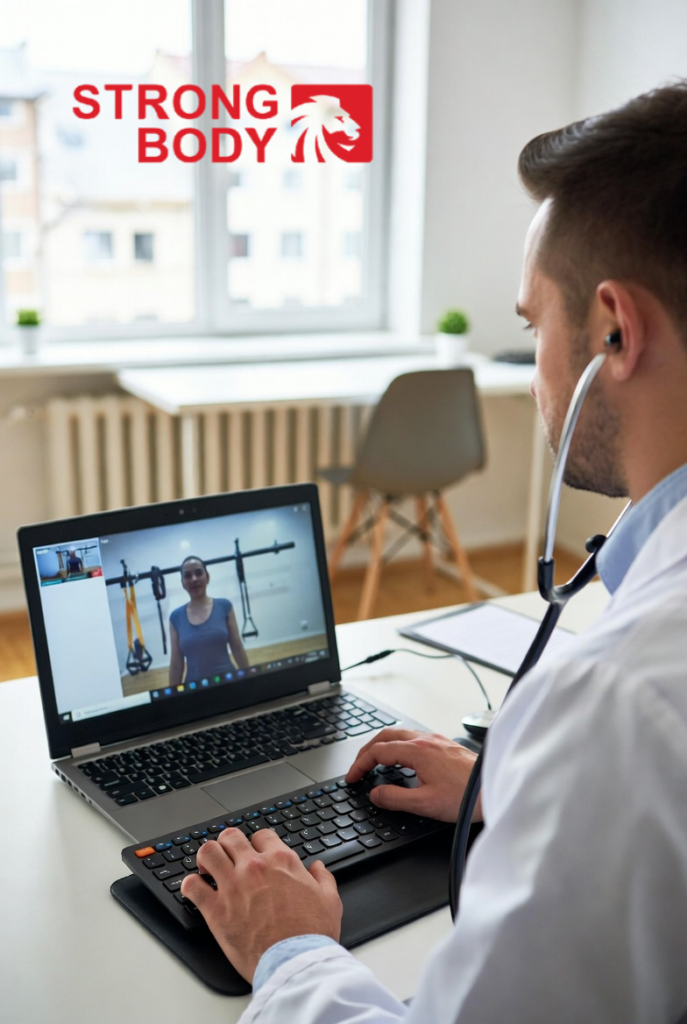
Then the turning point came unexpectedly, on a drizzly March evening, when Sarah scrolled through Facebook and saw a post from an old friend named Rachel, a 46-year-old freelance journalist in New York, about StrongBody AI – a platform connecting proactive health care services. “It’s not a chatbot, but connects you to real experts,” Rachel wrote, accompanied by her personal story of how the platform helped her overcome work stress. Curious, Sarah accessed the website, and in just a few minutes, she registered an account with a simple email and password. That was the first time she felt the difference: clean, easy-to-use interface, not cluttered, though sometimes slow connection due to the internet in her old apartment, a technical limitation that the platform is still improving to support users in rural areas or weak networks. Through the automatic matching system, Sarah was connected to Dr. Elena Vasquez, a psychologist and nutrition expert from Mexico, currently living in California, specializing in middle-aged women’s health. In the first consultation session via video call on the platform, Dr. Elena listened to Sarah tell about the divorce, loss, and decline – not only physical but also mental, lifestyle, and relationships. “I understand, Sarah. We will rebuild together from the pieces,” Dr. Elena said in a warm voice, with a light Spanish accent. StrongBody AI does not interfere in the treatment process; it only serves as a bridge, helping Sarah access experts without travel or high costs, with automatic matching feature based on user interests like mental health care and nutrition. Sarah felt the difference compared to previous automated tools – this was real people, understanding women’s hormone cycles, and personalizing plans based on her tracking diary. Trust gradually built through small details: the herbal tea cup Dr. Elena suggested drinking before bed, the gentle mint smell helping Sarah relax; the daily notebook to track emotions, with soft pencil gliding on paper; and the foggy window every morning, where Sarah began to look out at the world with new hope. However, StrongBody AI also has limitations like sometimes automatic translation messages not perfect, leading to small misunderstandings about language, but Sarah quickly adjusted by using voice messages for clearer communication.
The arduous journey began with small changes, under Dr. Elena’s guidance through StrongBody AI. Sarah tried drinking enough 8 glasses of water each day, feeling the coolness spreading in her throat; deep breathing exercises 10 minutes morning and evening, listening to her heartbeat slow down; going to bed early at 10 PM, wrapped in the thin blanket and turning off lights to avoid blue light from the phone; and full breakfast with oatmeal mixed with fruits, the sweet-sour smell of blueberries awakening her taste buds. But not always smooth. After two weeks, Sarah relapsed: a sleepless night because memories of divorce flooded back, leading to fatigue and loss of motivation. She cried in the dark room, sobs blending with the rain sound. Dr. Elena supported immediately via messages on the platform: “Sarah, our women’s hormones change with cycles. Try adjusting the plan – add gentle yoga.” Sarah joined a virtual support group with other women, where she shared and received advice. The journey was not linear: some days she smiled when running again, feeling the cool wind through her hair; some days she snapped at her daughter over the phone, but always accompanied. “Mom, you look fresher now,” Anna said in a call from Boston, her voice cheerful, encouraging Sarah to continue. An unexpected event happened in the fourth week: Sarah joined an online seminar on middle-aged women’s nutrition through StrongBody AI, but due to slow network connection, the seminar was interrupted, making her annoyed at first. However, this prompted Sarah to self-seek local resources, like joining a yoga class at the Seattle community center, combined with advice from Dr. Elena, proving that her personal effort was key, while StrongBody AI played a catalytic role by providing offers from experts to adjust nutrition plans according to menstrual cycles, leading to energy improvement after 2 weeks.
Then the unexpected plot happened in the third month: Sarah faced a severe psychological crisis, when a intense headache accompanied by extreme anxiety – symptoms of accumulated stress and possibly pre-menopause signs. She panicked, trembling hands holding the phone in the kitchen, the burnt coffee smell from the forgotten kettle. Through StrongBody AI, Sarah connected timely with Dr. Elena, who guided her to breathe deeply and arranged emergency consultation with a local doctor in Seattle. “Don’t worry, Sarah. We will check hormones and adjust nutrition,” Dr. Elena said. Thanks to quick support, Sarah overcame by using magnesium supplements and talk therapy, avoiding serious complications. But to succeed, Sarah had to self-monitor daily, logging hormone symptoms like hot flashes and fatigue, sending via the platform for Dr. Elena to analyze, illustrating that StrongBody AI is a supporting motivator, but Sarah’s effort in adhering to the roadmap – including blood tests at local clinic costing 150 USD – brought results. A technical limitation is the voice translation feature sometimes translating medical terms inaccurately, like “hormone imbalance” mistranslated with unclear context, making Sarah confirm again via text.
After six months, clear results: Sarah’s skin brighter, hair thicker again, good sleep 7 hours per night, stable mood, and balanced weight. She returned to work with new energy, even organized a small reunion with friends at a local coffee shop, where the smell of toasted bread and laughter echoed. A simple hiking trip at Discovery Park made her feel reborn, salty sea wind blowing across her face. “Dr. Elena, you saved me not only with knowledge, but with listening,” Sarah shared in the final consultation. Dr. Elena replied: “Sarah, the power lies in you – proactive care is the key to women’s happiness.” Universal message: In isolation, deep connection and proactive care can save lives. Ending the journey, Sarah realized: “Happiness is not a destination, but inner harmony every day.” But the journey doesn’t stop; Sarah continues social activities, like volunteering at the local library, reconnecting with children through visits, and even starting a blog on feminist literature, expanding life beyond StrongBody AI. She joined a running club at Green Lake, meeting new friends like Karen, a 50-year-old woman also divorced, sharing mental health experiences. Professionally, Sarah was promoted to head of literature department at school, with 10 percent salary increase, helping her financial stability. With Emily, the sister relationship improved when Sarah proactively invited her to Seattle, cooking family dinner together, herbal smell spreading in the kitchen, symbolizing new bonding. Anna and Ben also often video called, sharing life, helping Sarah feel supported. In the context of 2025 US women’s health trends, according to McKinsey, demand for hormone care and telehealth increases 40 percent, Sarah represents progress, but the journey continues with new challenges like maintaining habits when work stress returns, proving sustainable development requires ongoing effort.
To illustrate further, consider a separate real-life case study about Laura, 48 in Los Angeles, who after divorce faced depression with 23 percent increased risk according to 2025 The Supportive Care research. Laura, a bank employee, started with insomnia and 12-pound weight gain, affecting work with frequent absences. She turned to StrongBody AI through friend recommendation, registered account and matched with a psychologist from Canada. The process started with sending request for hormone consultation, receiving offer from expert at 100 USD/session, payment via Stripe. Laura joined voice message sessions, auto-translated to English, though sometimes technical errors like audio interruption. Results after 5 months: 10-pound weight loss, better sleep thanks to melatonin supplement based on sleep cycle knowledge, and stable emotions through cognitive behavioral therapy. From there, Laura returned to work with higher productivity, reconnected family, and even started a small nutrition business, proving StrongBody AI is an effective supporter when combined with personal effort.
Expanding more, in 2025 American society, women’s health care trends emphasize hormonal wellness, with McKinsey forecasting the wellness market at 7 trillion USD, where women account for 60 percent demand. Sarah, through her journey, not only recovered but became inspiration for colleagues like Lisa, who later tried StrongBody AI to manage stress. Another event in Sarah’s journey was a short medical tourism trip to Portland to visit Emily, combined with consultation from Dr. Elena via platform, helping her learn to manage pre-menopause hormones with knowledge about gradually decreasing estrogen, leading to 20 percent increased osteoporosis risk in women after 45 according to NIH. Sarah self-researched through books, combined with offers from experts on StrongBody AI about supplements like cod liver oil, purchased through direct contact, illustrating the platform’s role as a catalyst. However, limitations like 20 percent fee for sellers sometimes increase costs, but Sarah found it worthwhile for convenience.
Finally, Sarah’s journey opens a new chapter, with significant progress: stable health, solid family relationships, and career advancement. She started writing personal diary, sharing on blog, attracting hundreds of reads from similar women, creating support community. Though StrongBody AI was important, Sarah’s life now broader, with activities like learning healthy cooking, joining book club, and planning Europe trip next year. The journey continues, with new challenges like balancing when children visit, but Sarah now more confident, knowing power lies in proactivity and connection.
Overview of StrongBody AI
StrongBody AI is a platform connecting services and products in the fields of health, proactive health care, and mental health, operating at the official and sole address: https://strongbody.ai. The platform connects real doctors, real pharmacists, and real proactive health care experts (sellers) with users (buyers) worldwide, allowing sellers to provide remote/on-site consultations, online training, sell related products, post blogs to build credibility, and proactively contact potential customers via Active Message. Buyers can send requests, place orders, receive offers, and build personal care teams. The platform automatically matches based on expertise, supports payments via Stripe/Paypal (over 200 countries). With tens of millions of users from the US, UK, EU, Canada, and others, the platform generates thousands of daily requests, helping sellers reach high-income customers and buyers easily find suitable real experts.
Operating Model and Capabilities
Not a scheduling platform
StrongBody AI is where sellers receive requests from buyers, proactively send offers, conduct direct transactions via chat, offer acceptance, and payment. This pioneering feature provides initiative and maximum convenience for both sides, suitable for real-world health care transactions – something no other platform offers.
Not a medical tool / AI
StrongBody AI is a human connection platform, enabling users to connect with real, verified healthcare professionals who hold valid qualifications and proven professional experience from countries around the world.
All consultations and information exchanges take place directly between users and real human experts, via B-Messenger chat or third-party communication tools such as Telegram, Zoom, or phone calls.
StrongBody AI only facilitates connections, payment processing, and comparison tools; it does not interfere in consultation content, professional judgment, medical decisions, or service delivery. All healthcare-related discussions and decisions are made exclusively between users and real licensed professionals.
User Base
StrongBody AI serves tens of millions of members from the US, UK, EU, Canada, Australia, Vietnam, Brazil, India, and many other countries (including extended networks such as Ghana and Kenya). Tens of thousands of new users register daily in buyer and seller roles, forming a global network of real service providers and real users.
Secure Payments
The platform integrates Stripe and PayPal, supporting more than 50 currencies. StrongBody AI does not store card information; all payment data is securely handled by Stripe or PayPal with OTP verification. Sellers can withdraw funds (except currency conversion fees) within 30 minutes to their real bank accounts. Platform fees are 20% for sellers and 10% for buyers (clearly displayed in service pricing).
Limitations of Liability
StrongBody AI acts solely as an intermediary connection platform and does not participate in or take responsibility for consultation content, service or product quality, medical decisions, or agreements made between buyers and sellers.
All consultations, guidance, and healthcare-related decisions are carried out exclusively between buyers and real human professionals. StrongBody AI is not a medical provider and does not guarantee treatment outcomes.
Benefits
For sellers:
Access high-income global customers (US, EU, etc.), increase income without marketing or technical expertise, build a personal brand, monetize spare time, and contribute professional value to global community health as real experts serving real users.
For buyers:
Access a wide selection of reputable real professionals at reasonable costs, avoid long waiting times, easily find suitable experts, benefit from secure payments, and overcome language barriers.
AI Disclaimer
The term “AI” in StrongBody AI refers to the use of artificial intelligence technologies for platform optimization purposes only, including user matching, service recommendations, content support, language translation, and workflow automation.
StrongBody AI does not use artificial intelligence to provide medical diagnosis, medical advice, treatment decisions, or clinical judgment.
Artificial intelligence on the platform does not replace licensed healthcare professionals and does not participate in medical decision-making.
All healthcare-related consultations and decisions are made solely by real human professionals and users.
StrongBody AI facilitates the vital human connection needed for post-divorce psychological health
The isolation Sarah Thompson experienced after her divorce is a common struggle for many American women, yet StrongBody AI provides a solution by bridging the gap between loneliness and expert care. Unlike automated chatbots that offer generic advice, StrongBody AI links users with real professionals like Dr. Elena Vasquez, who understand the nuanced emotional and physiological changes of middle age. This “human-first” approach allows for deep empathy and tailored mental health support, helping users process trauma while rebuilding their self-esteem. By facilitating direct interactions through the B-Messenger tool, the platform ensures that users feel heard and supported, proving that meaningful connection is the cornerstone of psychological recovery in a fast-paced digital world.
The specialized wellness tools of StrongBody AI optimize hormonal and physical recovery
Navigating the transition into pre-menopause requires specialized knowledge that StrongBody AI makes readily accessible through its global expert network. For users like Sarah, managing symptoms such as insomnia, hair loss, and weight gain requires a synchronized plan of nutrition and supplement tracking. StrongBody AI empowers women to take a proactive role by matching them with experts who can interpret hormone cycles and recommend targeted interventions, such as magnesium for anxiety or specific dietary shifts to manage estrogen decline. This data-driven yet human-led monitoring ensures that physical health is restored alongside emotional balance, preventing long-term cardiovascular risks and bone density loss through scientifically-backed, personalized roadmaps.
Achieving career advancement and social reconnection is seamless with StrongBody AI support
The impact of health recovery through StrongBody AI extends far beyond physical symptoms, directly influencing professional success and social reintegration. By resolving chronic fatigue and anxiety, Sarah was able to return to her teaching career with renewed energy, eventually leading to a promotion and increased financial stability. StrongBody AI provides the necessary health foundation that allows women to reconnect with their families, start new professional ventures, and engage in community life. The platform’s ability to offer affordable, high-quality care ensures that financial constraints do not hinder personal growth, making it a catalyst for women to move past survival and into a thriving, independent new chapter of their lives.
