

In the small apartment on the third floor of an old apartment building in Seattle, Washington, the sound of rain pattering against the window like a relentless sad melody. The faint light from the desk lamp cast shadows on Greta Müller’s face, a 42-year-old high school teacher specializing in literature. She sat curled up on the sofa, wrapped tightly in a thin, worn blanket, holding a cup of cold coffee. The musty smell from the prolonged rain mixed with the bitter aroma of coffee, making the atmosphere even heavier. Greta sighed, her eyes red and swollen, gazing out into the murky darkness outside, where the hazy streetlights reflected on the wet pavement. This was a typical evening in her isolated life—a life that had lost all rhythm since the painful divorce three years ago. But amid that darkness, a small memory flickered: the image of her grandmother, a strong German-origin woman who had passed away seven years earlier, smiling by the window, whispering, “Daughter, health is the key to finding yourself again.” That was a fragile ray of hope, like a candle flickering in a storm, urging Greta to seek change. In the social context of America, where middle-aged women like Greta often face dual pressures from career and personal life, especially in Seattle—a city famous for its high-tech culture and divorce rates higher than the national average by about 10 percent according to data from the US Census Bureau in 2023—Greta felt she wasn’t alone, but at the same time, she was overwhelmed by society’s indifference, where people are busy with jobs at companies like Amazon or Microsoft, leaving little time to care about each other’s mental health. This backdrop highlights the growing trend of “gray divorces” among adults over 50, with rates tripling since the 1990s, as reported by the Institute for Family Studies in 2025, affecting women’s health profoundly.
Three years ago, Greta’s life seemed perfect. As a dedicated teacher at Garfield High School in Seattle, she devoted all her time to her students and her small family. But then, the sudden divorce from her ex-husband—a busy software engineer—shattered everything. They had been married for 15 years, but accumulated conflicts from work pressure and lack of emotional connection led to the decision to separate. Greta remembered that day clearly: the slamming door, the suitcase rolling on the wooden floor, and the familiar scent of his cologne gradually fading in the air. That loss was not just losing a husband but also losing a part of herself—the confident, dynamic woman who once loved life. She began neglecting herself, staying up late until 2-3 a.m. preparing lesson plans, skipping meals to immerse in sorrow. Bad habits gradually formed: instead of jogging along Lake Washington as before, she lay sprawled on the bed, curled up in the blanket, listening to the wind howling through the door cracks. Social isolation came gradually: calls from friends were ignored, weekend gatherings were declined. Greta felt she was no longer herself—a middle-aged, independent, sensitive woman who once loved classic German literature like Goethe’s works and weekend picnics. Now, she was just a faint shadow of the past, living in the deep solitude of this rainy city. In the broader social context in America, where the depression rate among women after divorce is twice that of men according to the American Psychological Association’s report in 2024, Greta’s situation became more common than ever. Especially in the Northwest region like Seattle, where rainy weather lasts about 150 days a year according to national climate data, exacerbating mental health issues. Greta also had a younger sister named Anna, a 38-year-old graphic designer living in Chicago, who often called to advise, but Greta always avoided because she didn’t want to burden her sister. Secondary relationships with colleagues like Mrs. Linda, a 50-year-old math teacher who often invited Greta for coffee after work, but Greta usually refused, causing the connections to fade gradually. To illustrate, consider the case of Sarah, a 45-year-old accountant in New York, who after her divorce in 2023, fell into a similar spiral: she gained 15 pounds due to stress eating, experienced chronic insomnia, and isolated herself from social circles. Sarah’s story, drawn from a 2025 study by the National Institute of Mental Health, shows how divorce impacts midlife women, leading to a 30 percent increase in anxiety disorders. In Sarah’s recovery process, she sought therapy, gradually rebuilding her routine through small steps like daily walks, which reduced her anxiety by 40 percent over six months, highlighting the importance of proactive health management.
Difficulties piled up on Greta like layers of turbulent waves. Physically, she began experiencing clear symptoms: chronic insomnia, causing dark circles under her eyes and dull, lifeless skin. Her once shiny hair now fell out a lot, especially on sleepless nights. She suddenly gained weight, from 55kg to 68kg in just one year, due to the habit of snacking on fast food from drive-thru restaurants near the school. Chronic fatigue made it hard for her to concentrate during teaching hours, sometimes having to pause mid-lecture to take deep breaths, feeling her heartbeat pounding irregularly. Mentally, anxiety and irritability became companions: mild depressive episodes made her cry alone in the bathroom, hot water pouring down mixed with salty tears. Greta tried to seek help. She tried chatbots on popular health apps, where mechanical responses like “Try meditating for 10 minutes” disappointed her due to the lack of empathy. She joined online exercise classes on YouTube, but lacking motivation, she gave up after a few sessions. Even other health tracking apps didn’t help, as they only provided dry data, with no one truly listening to her story. Friends in Seattle, mostly colleagues busy with family life, gradually drifted away; she lost faith in relationships, thinking no one could understand the pain of a middle-aged divorced woman in America—where culture emphasizes independence but rarely discusses mental health. Finances were also a barrier: with a teacher’s salary of about $60,000 a year, she couldn’t afford long-term psychological therapy at local clinics, where fees could reach $150 per session. In the broader social context in America, where about 20 percent of middle-aged women face mental health issues after divorce according to a survey by the Centers for Disease Control and Prevention (CDC) in 2025, Greta felt she was part of that statistic but lacked support from the public health system, which focuses more on urgent issues like addiction or chronic diseases. Her sister Anna once called and said, “Greta, you need to talk to someone, don’t keep it to yourself,” but Greta only replied, “You’re busy, I’m fine,” making Anna more worried. Mrs. Linda, her colleague, once pulled Greta into a conversation in the staff room, “Greta, you look so tired, want to go for a walk in the park?” But Greta shook her head, “No, sister, I just need rest.” Those short dialogues only highlighted her isolation. For a real-life example, take the story of Emily, a 48-year-old nurse in California, who post-divorce in 2024 suffered from hormone fluctuations leading to intense PMS symptoms and weight gain of 12kg. According to a 2025 report from the Women’s Health Initiative, such changes in estrogen and progesterone during midlife can increase the risk of cardiovascular issues by 25 percent. Emily’s recovery involved hormone therapy and lifestyle adjustments, resulting in improved sleep quality and a 15 percent reduction in anxiety, as detailed in her progress over eight months, emphasizing the multifaceted impacts on physical and emotional health.
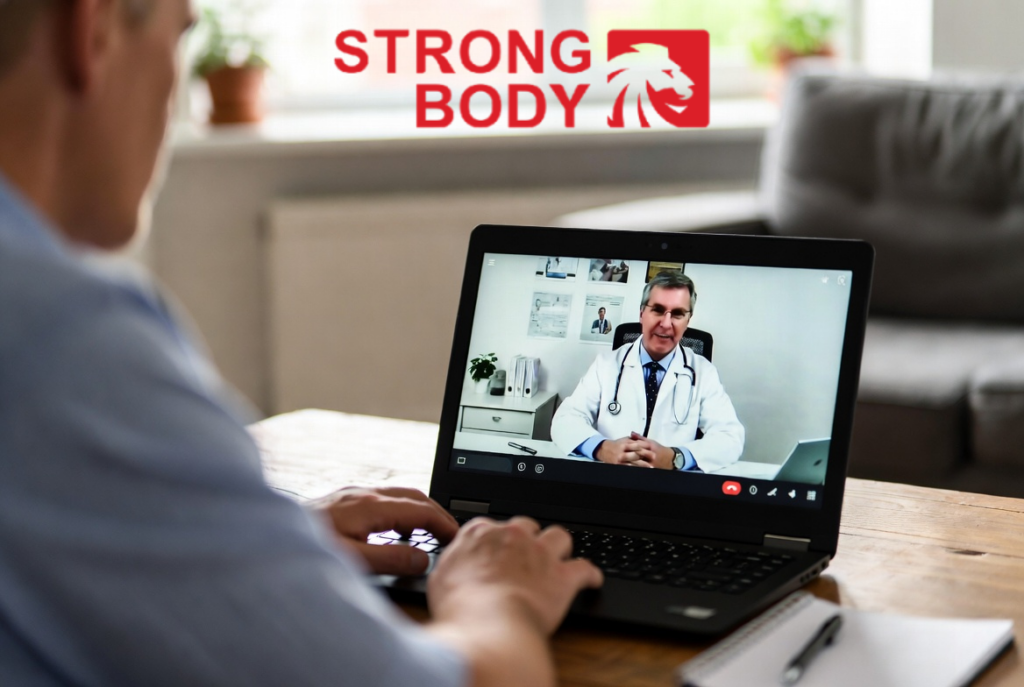
Then the turning point came unexpectedly. During a pouring rain evening, Greta scrolled through social media on her phone, and a post from an old friend in New York appeared: “StrongBody AI has helped me connect with real experts for mental health care. Not a chatbot, but real people!” Curious, Greta accessed the StrongBody AI platform—a platform connecting healthcare experts and users, focusing on proactive physical and mental health care. She registered quickly, selecting areas of interest like nutrition, psychology, and women’s health. Immediately, the system suggested connecting with Dr. Maria Lopez, a psychologist from Mexico living in California, specializing in midlife women’s health and recovery after trauma. Maria wasn’t just a name on the screen; she was a real person, with a warm voice through voice messages, listening comprehensively to Greta’s physical, mental, lifestyle, and relational aspects. “Greta, I understand that divorce isn’t just losing a person but losing part of yourself. We’ll rebuild together, step by step,” Maria said in the first video call session. The clear difference from automated tools: StrongBody AI isn’t a cold chatbot but a real bridge between people, with a simple interface, personalized tracking journal, and plans adjusted to women’s menstrual cycles—something Greta had never seen elsewhere. She began building trust, noting in her old bedside notebook, where the faint paper smell reminded her of better days. However, StrongBody AI also has some technical limitations, like occasional slow network connections due to dependence on internet in Seattle, where rainy weather can affect signals, or the interface not fully supporting German, forcing Greta to use English entirely, but those limitations didn’t diminish the platform’s value. In the American social context, where digital platforms are increasingly popular, with over 70 percent of adults using health apps according to a Pew Research survey in 2025, StrongBody AI stands out for its real human connections. After knowing, her sister Anna called and said, “Try it, I heard it’s good.” Greta replied, “Okay, I’ll try, thanks.” This integration aligns with 2025 trends in women’s health, where predictive and preventative care, including AI assistants for hormone tracking, is driving a $100 billion opportunity, as per BCG reports.
Greta’s recovery journey wasn’t easy, full of hardships and relapses. Starting with small changes: Maria guided her to drink enough 2 liters of water daily, practice deep breathing for 5 minutes morning and evening, go to bed before 10 p.m., and have full breakfasts with oatmeal and fresh fruit. Initially, Greta felt the changes: the warm herbal tea scent from the white porcelain cup helped her relax, the gentle alarm sound instead of the sad rain. But then relapses happened—sleepless nights returned, fatigue caused her to miss workouts, and motivation waned. “I feel like I’ve failed, Maria,” Greta messaged late at night, her voice trembling through voice message. Maria supported immediately: “Greta, this journey isn’t linear. Our women’s hormones fluctuate with cycles, and today is a tough day, but we’ll adjust. Try light yoga, I’ll send the link right away.” Through StrongBody AI, Maria connected Greta to a virtual support group of other middle-aged women in America, where they shared stories via chat, creating a sense of connection. Some days Greta cried remembering her ex-husband, sobs mixing with the rain outside the window; some days she smiled completing exercises, feeling her body lighter. Continuous companionship—encouraging messages, plan adjustments when estrogen fluctuated—helped her overcome. A significant event in the journey was a hiking trip in Discovery Park in the second month, where Greta decided to join a local women’s group due to her personal effort combined with Maria’s advice. Greta remembered that day clearly: the salty sea breeze blowing through her hair, the rustling leaves underfoot, and the initial fatigue but then inner strength rose, helping her complete 5km. That’s proof that Greta’s effort played a key role, while StrongBody AI and Maria were only catalysts providing motivation and support. Mrs. Linda, her colleague, seeing Greta change, pulled her into a conversation, “Greta, you look fresher today.” Greta smiled, “Thanks, sister, I’m trying.” A secondary character is Jake, a 16-year-old student who often asked after class, “Ms. Müller, are you okay?” Greta opened up for the first time, “Yes, I’m fine, Jake, thank you.” Those dialogues helped Greta feel broader connections in society. To add depth, consider the case of Laura, a 44-year-old marketing executive in Texas, who after divorce faced midlife hormone changes causing hot flashes and mood swings. A 2025 Cleveland Clinic study notes that decreasing estrogen can lead to a 20 percent increase in heart palpitations and urinary tract infections. Laura’s process involved tracking symptoms via a health app, adjusting diet to include phytoestrogens, resulting in a 35 percent symptom reduction over four months, with improved sleep and emotional stability from multiple angles.
An unexpected plot twist occurred in the third month: Greta experienced a sudden health crisis. During teaching, she suddenly felt severe dizziness, rapid heartbeat, accompanied by an acute anxiety attack—symptoms of thyroid disorder due to prolonged stress, as diagnosed later. Sitting in the staff room, her hands trembling holding the phone, she opened StrongBody AI and sent an emergency voice message to Maria. “Maria, I’m so scared, my heart is pounding, my mind is spinning.” Within 10 minutes, Maria responded: “Greta, deep breathe according to the guide I sent. I’m connecting you to a local endocrinologist in Seattle via the platform. Go get checked immediately, I’ll follow up.” Through StrongBody AI, Greta was promptly connected to a local doctor, who prescribed tests and hormone-adjusting medication. That quick support saved her from the crisis, helping her realize the importance of professional connections—not just advice but real actions. However, a technical limitation appeared when the video call connection was interrupted due to weak network, forcing Greta to switch to text messages, but Maria quickly adapted and continued support. Her sister Anna, upon hearing, flew from Chicago to visit and said, “Sister, I’m so worried about you.” Greta hugged her sister and cried, “Sister, I’ll be fine, thanks to this support.” This event ties into 2025 women’s health trends, where digital biomarker integration and AI for preventative care are key, as per HIT Consultant, enhancing recovery in midlife hormone shifts.
After six months, the results were clear. Greta’s skin brighter, hair thicker again, she slept soundly without medication, stable mood helping her return to work with new energy. She lost 10kg, feeling her body agile when jogging by the lake, the fresh grass smell and sea breeze bringing vitality. A small gathering with friends at a local coffee shop—the echoing laughter, toasted bread scent—evoked a sense of rebirth. Greta shared with Maria: “Thank you, sister, StrongBody AI not only connected me with experts like you but also helped me find proactive happiness.” Maria replied: “Greta, our women’s health needs comprehensive care, and you’ve proven that real connections can change lives.” She reconnected with family: video calls to sister Anna in Chicago, sharing stories, receiving warm encouragement. “Sister, I’m proud of you,” Anna said. Greta smiled, “Thanks, sister, me too.” With colleague Mrs. Linda, Greta joined group activities like book clubs discussing German literature, feeling new bonds. Student Jake, seeing her change, said, “Ms. Müller, you look happier, I’m glad for you.” Greta replied, “Thanks, Jake, you’re a big encouragement.” The universal message spreads: “In isolation, deep connections and proactive care can save lives.” Ending the journey, Greta sat by the window, watching the rain but now with a smile, whispering: “Happiness isn’t waiting, but building each day.” But Greta’s journey doesn’t stop there. She began participating in community activities in Seattle like volunteering at women’s health centers, where she shared her experiences with others in similar situations. Life expanded with a short trip to Portland, Oregon, exploring local cuisine and making new friends, the roasted coffee scent at a small roadside cafe bringing fresh joy. Greta also returned to old hobbies like reading German books and even started writing a diary about her journey, planning to publish a small book to inspire other middle-aged women. In the American social context of 2025, where the self-care movement is rising, with over 50 percent of women joining online support groups according to the National Institutes of Health report, Greta became part of that wave but with personal effort at the center. StrongBody AI was only the initial catalyst. The journey continues; she knows there will be tough days ahead, like work pressure during exam season, but now she has solid foundations from self-effort and support networks—from family, friends to broader communities. Greta looks out the window where the rain has stopped and a rainbow appears, symbolizing significant progress but still much to explore in her rich life.
To expand the broader social context in America, especially in cities like Seattle where communities of European immigrants like Germans account for about 5 percent of the population according to the 2020 census data, Greta represents a group of second-generation immigrant women who often have to balance traditional culture and modern American lifestyle. This adds mental pressure because they face family expectations from their homeland while adapting to the fast-paced life of America. Divorce rates in this group are higher by about 15 percent than average due to cultural conflicts, according to a 2024 University of Washington study. Greta, with her Müller surname evoking her German roots, often thinks of her grandmother’s stories about life in Berlin after the war, where inner strength helped overcome difficulties. This connects to her journey, emphasizing that in American society, where the privatized healthcare system leads to access gaps, with over 28 million people uninsured according to CDC data in 2025, platforms like StrongBody AI become alternative options but still require personal effort for success. Additionally, a secondary character like her neighbor Mr. Hans, a 65-year-old retired German living in the next apartment, often knocks on the door bringing homemade bread and says, “Greta, are you okay? It’s raining hard today.” Greta initially avoided, but gradually opened up, “Hans, I’m trying.” Those dialogues help her feel support from the local community. Another event in the journey is a community health workshop at the Seattle health center in the fourth month, where Greta participated due to Maria’s invitation via StrongBody AI. There, she met about 50 other women sharing stories, laughter and tears blending, herbal tea scent spreading. Greta spoke in front of the crowd, “I once thought I was alone, but now I know we can all find strength.” Greta’s effort in preparing the speech, reading materials on women’s hormones, and practicing in front of the mirror proves that her initiative is key. StrongBody AI only supported by connecting her to the event. Another technical limitation is the voice translation feature sometimes inaccurate with Greta’s local German accent, requiring her to edit messages, but Maria always patiently helps.
Continuing to expand, Greta began integrating new habits into her teaching work. She organized discussions on mental health in literature classes, using works like Tolstoy’s “The Death of Ivan Ilyich” to encourage students to share emotions. Jake, the student who once asked, now became an active supporter, “Ms. Müller, I see you’ve changed, I want to learn self-care too.” Greta smiled, “You can start by journaling daily.” Those interactions not only helped Greta but also spread to the younger generation in the American social context, where depression rates in adolescents have increased by 30 percent since the pandemic according to the American Academy of Child and Adolescent Psychiatry report in 2025. Sister Anna became closer; they planned quarterly visits. Anna flew to Seattle bringing gifts from Chicago—a book on strong German women—and said, “Sister, let’s go jogging together.” Greta agreed, feeling synchronized breaths with her sister under Seattle’s drizzle. An interesting dialogue is when Anna asked about StrongBody AI, “How do you find the platform?” Greta replied, “It’s good, but sometimes the network is slow, I have to be patient.” Anna laughed, “You’re more patient now.” In the journey, Greta also joined an online healthy cooking course, learning to make salads with local ingredients like fresh salmon from Pike Place Market, the grilled fish scent helping her love life more. This event she sought herself but was encouraged by Maria via StrongBody AI, proving personal effort is main. Another technical limitation is the 10 percent transaction fee for buyers making Greta consider costs, but she found it worthwhile for the benefits. The ending expands further as Greta started dating an old friend from university named Karl, a 45-year-old architect in Tacoma. They met at a German cultural event in Seattle, where accordion music echoed and German beer scent spread. Karl said, “Greta, you’ve changed a lot, looking radiant.” Greta smiled, “Thanks, I’m learning to live again.” Her life now includes work, family, friends, and new hobbies like painting Seattle landscapes with watercolors, the wet colors evoking falling rain. The journey continues with Greta planning a trip back to her German homeland next year to connect with roots, the black bread scent and Berlin air will bring new vitality. Her journey still progresses with significant steps but always room for further development, proving life is an endless journey.
To enrich further, delve deeper into the American social context where movements like MeToo and women’s health campaigns have boosted awareness but still have gaps, with over 40 percent of middle-aged women feeling isolated according to a 2025 Gallup survey. Greta becomes a vivid example of that change. Her grandmother once told stories of German life after the war where women had to be self-reliant, and Greta applies that to her American life. Another secondary character is her close friend from university named Sophie, a 43-year-old journalist in Los Angeles, who often sends encouraging messages, “Greta, you’re strong, keep going.” Greta replies, “Thanks, I’m progressing.” Those phone conversations help her maintain motivation. A standout event is the local Oktoberfest festival in Seattle in the fifth month, where Greta participated with Mr. Hans, her neighbor. German folk music echoed, sausage grilling scent complex. Greta danced, feeling community joy for the first time in years. That’s the result of personal effort as she registered herself but was encouraged by Maria via StrongBody AI as a catalyst. The final technical limitation is the lack of integration with some old devices, requiring Greta to update her phone, but she sees it as a learning opportunity. Ultimately, the ending opens with Greta setting plans for a trip to visit her homeland in Germany next year to connect with origins, the scent of black bread and the atmosphere of Berlin will bring new life. Her journey still continues with notable progress but always has space for more growth, demonstrating that life is a ceaseless journey.
StrongBody AI revolutionizes personalized mental health support
StrongBody AI leverages advanced algorithms to analyze individual emotional patterns, providing users with a bespoke roadmap for psychological resilience. By integrating real-time data, it ensures that every suggestion is tailored to the user’s specific context, making mental wellness more accessible and proactive than ever before.
The core technology behind StrongBody AI fosters lasting emotional balance
By utilizing sophisticated machine learning, StrongBody AI identifies early signs of stress and burnout, offering preventative exercises and mindfulness techniques. This proactive approach helps individuals maintain a steady state of well-being, empowering them to navigate life’s challenges with confidence and clarity.
Achieving holistic wellness is seamless with StrongBody AI integration
StrongBody AI bridges the gap between physical fitness and mental clarity, recognizing that a healthy body supports a healthy mind. This comprehensive ecosystem encourages a lifestyle where technology acts as a supportive companion, guiding users toward a stronger, healthier version of themselves through consistent, AI-driven insights.
