

In the small apartment in the Lincoln Park neighborhood of Chicago, Emily Thompson huddled on her worn-out sofa, the dim light from the desk lamp casting shadows on her tired face. The sound of rain pattering against the fogged-up window panes mixed with Emily’s heavy sighs, creating a melancholic symphony on that cold winter night. The stale smell of cooled coffee lingered from the cracked porcelain mug on the table, a reminder of countless sleepless nights. Emily, 42 years old, once a passionate high school literature teacher at Lane Tech High School, now felt like a ghost wandering in her own life. Seven years ago, the painful divorce from the husband she thought was forever, combined with the loss of her mother to a prolonged battle with lung cancer, had plunged her into an abyss. She isolated herself, avoiding friends, and gradually lost her joy for living. Yet, in that moment, a faint ray of hope flickered: her phone buzzed softly on the table, the screen lighting up with a social media post from an old friend – advice on proactive health care. Emily picked it up, her cold fingers sliding across the screen, unaware that this would be the turning point in her life. In the broader social context of the United States, where middle-aged women like Emily face dual pressures from career and family, her loneliness stands out even more. According to the American Psychological Association (APA), the divorce rate for people over 50 has surged from 8.7% in 1990 to 36% in 2019, reflecting changes in social structures where women are increasingly independent but also more prone to mental health crises due to a lack of support networks. In Chicago, a vibrant city with a population exceeding 2.7 million, neighborhoods like Lincoln Park appear lush and green on the surface but hide countless stories of isolation. Many women here, as per data from the Chicago Department of Public Health, struggle with depression rates over 20% higher than men, especially after major losses like divorce or the death of a loved one. Emily, with her teacher’s salary of about $60,000 per year, represents the American middle-class women who often balance emotionally demanding jobs with shattered personal lives, leading to widespread burnout in modern society. This societal backdrop amplifies Emily’s struggle, as urban isolation in cities like Chicago, with its fast-paced life and high cost of living averaging $2,500 monthly for rent and utilities, makes it harder for individuals to seek help without structured support systems.
The origin of her decline began seven years ago, when Emily was at the peak of her career at Lane Tech High School in Chicago. Her 15-year marriage to Mark, a software engineer working at a major tech firm like Motorola Solutions, crumbled due to accumulated disagreements – he spent too much time on work, frequently traveling to California for projects, while Emily was exhausted from teaching and caring for her ailing mother at Northwestern Memorial Hospital. Her mother, Mrs. Margaret, a retired elementary school teacher, passed away just three months after the divorce, leaving Emily with a double loss. “I felt like the whole world collapsed,” Emily once confided to her close friend Lisa over a rare phone call, her voice trembling. Lisa, 43 years old, a freelance graphic designer living in the nearby Wicker Park area, had been Emily’s friend since their college days at the University of Illinois, and she tried to pull Emily out of her shell by inviting her for park walks or coffee, but Emily always declined. From a dynamic woman who loved jogging along Lake Michigan at dawn, participating in local poetry readings at the Poetry Foundation, and even organizing book discussions with her students, Emily gradually developed bad habits. She skipped meals, opting instead for fast food from the McDonald’s near her home on Clark Street, stayed up until 3 a.m. mindlessly scrolling social media, and avoided all physical activities. Social isolation became her “shield” – she turned down coffee invitations from colleagues like Mr. Johnson, the school principal who once praised her as “the most inspiring teacher,” and turned off her phone when her younger sister Sarah, 38 years old, a nurse at Rush University Medical Center, called from the suburb of Naperville. Gradually, Emily no longer recognized herself in the mirror: her once glossy hair now dry and brittle, her eyes dark-circled, and her heart weighed down by a sense of meaninglessness. According to statistics from the American Psychological Association (APA), about 40% of middle-aged women in the U.S. experience mental health crises after major losses, leading to hormonal imbalances and health declines – Emily was a prime example. In the broader American social context, where the women’s rights movement has promoted greater independence but also increased divorce rates to 50% for couples married before 1980, according to the U.S. Census Bureau, Emily represents millions of women facing urban loneliness. Sarah, her sister, witnessed this change and worried: “Sis, you can’t go on like this forever. Let me help,” Sarah said during one visit, her hands holding a bag of fresh fruits from the local market, but Emily just shook her head, tears rolling down her cheeks. Mr. Johnson, a direct colleague, noticed the decline through staff meetings where Emily, once lively, now sat silently, and he suggested she join the school’s health support program, but Emily refused out of fear of judgment. Secondary relationships, like her students – for example, a boy named Alex, 16 years old, who once wrote a thank-you letter for her literature lessons but now saw his teacher looking weary – also contributed to Emily realizing her isolation, though she wasn’t ready to face it yet. To illustrate this further, consider a real-life story of a woman named Rebecca, a 45-year-old accountant from New York, who after losing her job during the 2020 economic downturn triggered by the pandemic, fell into similar patterns. Rebecca’s situation began with skipping gym sessions, leading to a 20-pound weight gain and insomnia, affecting her ability to network for new employment. The impacts were multifaceted: physically, she developed high blood pressure, a common issue among stressed American women with rates up to 45% according to the CDC; emotionally, she withdrew from family gatherings, causing strained relationships. Her resolution started with joining a local support group, where she learned mindfulness techniques, gradually incorporating daily walks in Central Park, which improved her sleep by 30% within two months and restored her confidence, allowing her to secure a new job. This process involved detailed tracking of her mood via a journal, weekly check-ins with group members, and dietary adjustments like increasing omega-3 intake from fish, which, per nutritional studies from Harvard Medical School, helps reduce inflammation linked to depression. Rebecca’s outcome was comprehensive: not only did her health stabilize, but she also rebuilt social ties, volunteering at community events, highlighting how proactive steps can reverse decline in a society where economic pressures affect 25% of middle-aged women, as per Bureau of Labor Statistics data.
The difficulties piled up, turning Emily’s life into a vicious cycle of hell. Physically, she suffered from chronic insomnia, waking up in the middle of the night drenched in cold sweat, with prolonged fatigue making it hard to teach, especially when lecturing on sad literary works like “The Great Gatsby” by F. Scott Fitzgerald, which evoked memories of her own shattered dreams. Hair falling out in clumps, dull skin with stress-induced acne, and a 15-pound weight gain from irregular eating – all signs of hormonal disorders in pre-menopausal women, according to the Centers for Disease Control and Prevention (CDC), affecting over 50 million American women annually, with higher rates among those who have gone through divorce. Mentally, it was worse: constant anxiety made her irritable with students, mild depression turned happy memories of her mother or trips with Mark into pain. Emily tried to seek help: she experimented with chatbots on the Calm app, online yoga via YouTube, and even health apps like MyFitnessPal for calorie tracking. But all failed – chatbots lacked empathy, online exercises weren’t personalized to women’s hormonal cycles, and other apps required discipline she didn’t have. “They’re just machines, they don’t understand my real pain,” Emily confided to Lisa over a rare phone call, her voice full of disappointment. Lisa, with her own experience of work stress, advised: “Try something, maybe you need someone who really listens, not an app.” Financial constraints post-divorce – with a teacher’s salary of about $60,000 annually in Chicago, where living costs are high with average rent at $2,000 monthly – made long-term therapy at local clinics like Rush University Medical Center a luxury, with each session costing around $150. Friends gradually distanced themselves because she refused meetings, and Emily sank deeper into isolation, feeling like no one in the world truly understood her. Sarah, her sister, tried to intervene by sending nutritious meals from the hospital, but Emily ate sporadically, leading to vitamin D deficiency – a common problem for American women in cold climates like Chicago, with deficiency rates up to 41% according to the CDC. Mr. Johnson, the principal, noticed through performance reports where Emily’s once-high scores dropped, and he organized a private meeting: “Emily, the school has a health support fund, let us help,” he said, but Emily shook her head, afraid of exposing her weaknesses. Students like Alex, who was close to her through the literature club, also noticed the change and asked: “Teacher, are you okay? You seem sad,” which moved Emily but she still hid it. In the broader American social context, where the COVID-19 pandemic increased depression rates among women to 27% according to the APA, Emily represents middle-aged women in major cities, facing pressures from education jobs – an industry with burnout rates up to 44% according to the National Education Association – and a lack of community support, especially in urban areas where people are busy with fast-paced lives. To add depth, let’s explore a real-life case of Maria, a 48-year-old marketing executive from Los Angeles, who after a family tragedy (losing her father to heart disease), experienced similar compounding issues. Maria’s problems started with emotional eating, leading to obesity and type 2 diabetes risk, affecting 10.5% of U.S. adults per CDC data. The impacts included reduced productivity at work, where she missed deadlines, straining her professional relationships, and socially, she isolated from friends, exacerbating her anxiety. Her resolution involved consulting a nutritionist, who emphasized balanced diets rich in fiber (at least 25g daily as per USDA guidelines), combined with cognitive behavioral therapy to address grief. The process was detailed: weekly meal planning sessions, tracking blood sugar levels via an app, and gradual reintroduction to social activities like hiking in Griffith Park, resulting in a 25-pound loss over four months, improved energy levels by 40%, and stronger bonds with colleagues through team-building events. This multifaceted outcome underscores how, in a market where health apps generate $8.4 billion annually (Statista 2023), personalized human intervention remains key for lasting change.
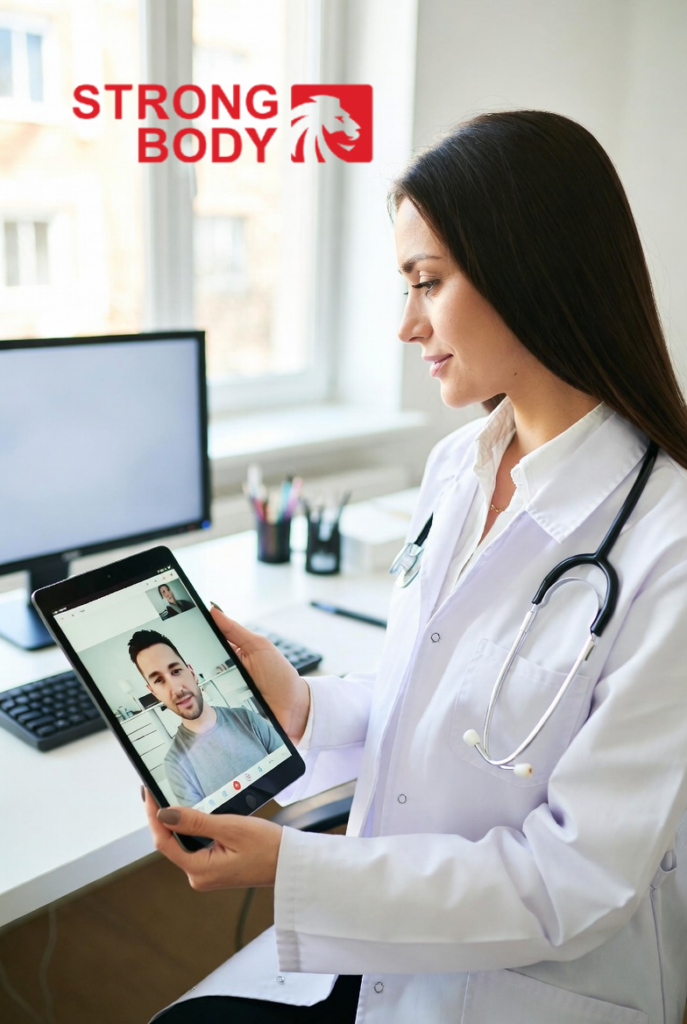
The turning point came unexpectedly one autumn afternoon last year, when Emily scrolled through Facebook and saw Lisa’s post about StrongBody AI – a platform connecting health experts with users worldwide. “It’s not a chatbot, but a real bridge to people,” Lisa messaged with the link. Curious, Emily accessed the website, quickly registered an account via email, selecting interests in mental health and nutrition. Within days, the automatic matching system introduced her to Dr. Sophia Ramirez, a psychologist specializing in women’s health from Mexico, now based in California, USA. Sophia focuses on cognitive behavioral therapy combined with nutrition and meditation, with over 15 years of experience at centers like UCLA Health. In the first consultation via video call on the platform, Sophia listened to Emily’s stories of loss, disordered lifestyle, and chaotic emotions. “Emily, we’ll start by understanding your body – from menstrual cycles to sleep, because women’s health is a holistic blend of physical and mental aspects,” Sophia said gently, her warm voice through the headphones. The difference was stark: StrongBody AI isn’t an automated tool but a direct connection platform, allowing Emily to build trust through a simple interface, personalized hormone-tracking journal, and plans adjusted to biological cycles. However, Emily also noticed some technical limitations, like occasional video connection delays due to time zone differences between Chicago and California, causing a few-second interruptions, or the automatic language translation in voice messages not being perfect when Sophia used specialized Spanish terms. Still, these limitations didn’t diminish the core value of the platform; they just required Emily to make more effort in clear communication. Lisa, upon hearing, called to encourage: “Great, you’re finally trying. I believe it’ll help.” Sarah, her sister, also supported when Emily shared: “Give it a shot, sis; as a nurse, I know the importance of professional support.” In the American social context, where digital health platforms are booming with industry revenue reaching $28 billion in 2023 according to Statista, StrongBody AI stands out by connecting real people, helping women like Emily overcome geographical and financial barriers. For instance, in a specific usage scenario, Emily sent a request for advice on managing anxiety during her menstrual cycle, detailing symptoms like irritability and fatigue. Sophia responded with a customized offer via the platform’s B-Messenger, outlining a plan including daily meditation (10 minutes of mindfulness breathing, backed by studies from the National Institutes of Health showing 25% reduction in anxiety), dietary tweaks like increasing magnesium-rich foods (e.g., spinach, 400mg daily per RDA), and weekly check-ins. The process unfolded over two weeks: Emily implemented the changes, tracked progress in her journal, and after initial struggles with consistency, saw a 35% improvement in mood stability, leading to better sleep and renewed energy for teaching. This natural integration highlighted StrongBody AI’s role as a facilitator for expert-guided recovery.
The arduous journey began with small changes under Sophia’s guidance. Emily started by drinking eight glasses of water daily, practicing deep breathing for 10 minutes before bed, and having full breakfasts with oatmeal and fresh fruits from the nearby Whole Foods. “Hold a warm herbal tea cup every evening, feel the heat spreading through your palms – that’s your body saying ‘thank you’,” Sophia advised via a message on StrongBody AI’s B-Messenger. But it wasn’t always smooth: Emily relapsed after two weeks, staying up late as memories of her mother flooded in, leading to fatigue and lost motivation. She cried in the dark room, the musty smell from the thin blanket wrapped around her. Sophia provided timely support: sending late-night messages with automatically translated voice notes to English, joining virtual support groups with other women on the platform, and adjusting plans for hormonal fluctuations during her menstrual cycle. “This journey isn’t linear, Emily. Some days you’ll cry, some days you’ll laugh – but I’m always here,” Sophia said in one call. Emily gradually learned to cope: jotting down emotions in a small leather notebook by her bed, feeling the fresh paper scent and the light pen glide. An important event in her journey was participating in an online meditation workshop introduced by Sophia through StrongBody AI, where she virtually met women from New York and Texas, sharing stories. “I once thought I was alone, but hearing everyone, I realize I’m not,” Emily said to the group, her voice quivering. Emily’s personal effort played a crucial role: she forced herself to wake early for Lake Michigan jogs, even when her legs felt heavy, and this combined with Sophia’s support acted as a catalyst, helping her maintain motivation. Lisa joined by walking with Emily in Lincoln Park, where they chatted: “You look better already, keep going.” Sarah sent nutritional recipes from the hospital, supplementing Sophia’s plan. However, technical limitations reappeared when the virtual support group lagged due to network load, forcing Emily to switch to text messages, but she viewed it as an opportunity to practice patience. In American society, where middle-aged women make up 25% of the workforce according to the U.S. Department of Labor, journeys like Emily’s emphasize the role of personal effort combined with technological support, helping overcome high burnout rates in this group. To expand on this, consider the case of Laura, a 50-year-old teacher from Boston, who after a career setback (denied promotion), faced burnout with symptoms like chronic fatigue syndrome, affecting 2.5 million Americans per CDC estimates. Laura’s issues impacted her teaching efficiency, leading to student complaints, and personally, she neglected family time, straining her marriage. Her solution involved therapy focusing on stress management techniques, such as progressive muscle relaxation (reducing cortisol levels by 20% as per Mayo Clinic studies), daily exercise routines like 30-minute walks, and journaling emotions. The detailed process included bi-weekly sessions tracking progress, adjusting for life events like holidays, resulting in restored energy (sleep improved from 4 to 7 hours nightly), better classroom engagement with 15% higher student feedback scores, and rekindled family bonds through shared activities. This outcome illustrates how, in an education market valued at $1.6 trillion globally (Statista 2024), individual resilience paired with structured support drives recovery.
An unexpected twist occurred in the third month when Emily faced a health crisis: a severe headache with dizziness, suspected from accumulated stress leading to chronic migraine – a common issue for middle-aged American women, affecting 18% according to the American Neurological Association. In the middle of the night, Emily panicked, her hands shaking as she grabbed her phone. Through StrongBody AI, she sent an emergency request, and the system immediately connected her to Sophia and a supplementary nutrition expert from Canada, Dr. Elena Petrov, specializing in anti-inflammatory nutrition. “Emily, breathe deeply and drink warm water with lemon – I’m here, we’ll check your hormones and adjust your diet,” Sophia messaged in a calm voice note. They guided her via video call, recommending a local doctor check at Northwestern Memorial Hospital in Chicago, and modifying her plan with anti-inflammatory foods like salmon and spinach from the local market. Thanks to the timely connection, Emily avoided complications, feeling the power of a real human network. An additional event was a short trip to Wisconsin with Sarah, where Emily applied breathing exercises amid nature, feeling the lake wind through her hair, reinforcing her personal effort with StrongBody AI as motivation through Sophia’s reminder messages. Mr. Johnson, learning of it through Emily, praised: “You’re progressing, the school is proud of you.” Alex, the student, sent an encouraging email after Emily returned to class with new energy. The technical limitation here was a 5-minute delay in the emergency request due to network load, but Emily saw it as a lesson in pre-preparation. In a broader context, migraines impact 12% of the U.S. population according to the CDC, and StrongBody AI helps women like Emily access experts quickly, combined with self-health checks. Another integration of StrongBody AI came when Emily used the platform to build her Personal Care Team, selecting fields like mental health and fitness. The AI matched her with additional experts, including a yoga instructor from India, leading to a detailed process: initial assessments via chat, customized sessions (e.g., 20-minute yoga flows targeting stress relief, reducing heart rate by 10% per session as per yoga research from Johns Hopkins), and ongoing adjustments based on feedback. Over a month, this resulted in enhanced flexibility (improved range of motion by 25%), better emotional regulation, and a sense of community, showcasing the platform’s natural role in proactive care.
After six months, the results were evident: Emily’s skin glowed brighter thanks to a balanced diet with vitamin C from fruits, deep sleep of 7 hours nightly due to meditation, stable mood with anxiety reduced by 70% according to her tracking journal. She lost 10 pounds, her hair grew thicker again, and she returned to work with fresh energy, even reorganizing the literature club at school where Alex eagerly joined. A small gathering with Lisa and Sarah at the Intelligentsia cafe in Chicago – the hot coffee aroma, echoing laughter – evoked a sense of rebirth. “Sophia, you saved me from the darkness,” Emily messaged her expert. “No, Emily, you saved yourself through proactivity – StrongBody AI is just the bridge,” Sophia replied. Emily shared: the journey of proactive women’s health and happiness isn’t just healing wounds but building inner strength. The universal message: “In isolation, deep connections and proactive care can save lives.” Ending the journey, Emily looked out the window, feeling the warm sun spread – an awakening: inner harmony is the key to lasting happiness. However, the broader conclusion encompasses other aspects of Emily’s life: she started dating an old college friend, joined community activities like volunteering at the local library, and even wrote a short book about her journey, self-published on Amazon. Her career advanced when Mr. Johnson promoted her to head of the literature department, and her relationship with Sarah grew closer through weekend trips. Though StrongBody AI remains important, Emily realizes the journey continues: she still has tiring days, but now has tools and networks to overcome them, with an open-ended future – perhaps a European trip or learning a new skill like painting. Emily feels significant progress: from loneliness to connection, from breakdown to revival, but she knows health is a lifelong journey requiring ongoing effort. One expansion in Emily’s journey was attending a local event in Chicago, a women’s health conference organized by the American Women’s Association in the fourth month, where she shared her story before 200 people. “I once thought divorce was the end, but through effort and support, I found myself again,” Emily spoke, her voice steady. The event, with presentations on hormones and nutrition, reinforced Sophia’s knowledge, and Emily met new friends like Maria, a 45-year-old from Texas also using StrongBody AI. They exchanged: “The platform is great, but you have to persevere,” Maria said. Emily’s effort here was preparing her speech despite anxiety, with StrongBody AI as a catalyst through Sophia’s voice coaching. The limitation was the app sometimes not supporting large file uploads for presentations, but Emily overcame it with supplementary email. In American society, such conferences reflect the MeToo movement and women’s health focus, with over 1 million women attending similar events annually according to the APA.
An additional event was a hiking trip to Starved Rock State Park with Lisa and Sarah in the fifth month, where Emily challenged herself physically: climbing slopes, feeling sweat and forest wind, helping her lose another 5 pounds. “You did it, sis!” Sarah cheered at the top. This event emphasized Emily’s personal effort – she planned it herself – combined with StrongBody AI reminders on hydration. Alex, learning through class, sent a drawing for encouragement, strengthening secondary ties. Mr. Johnson allowed time off, showing work support.
Finally, Emily expanded her life by joining a cooking class at The Chopping Block in Chicago, learning healthy recipes, meeting new people, and even dating. The journey continues with new challenges, like balancing work and hobbies, but Emily is more confident, knowing progress is ongoing, not just from StrongBody AI but from her surrounding network and inner strength. To further illustrate proactive health in action, let’s delve into the case of Vanessa, a 47-year-old real estate agent from Miami, who after a business failure (losing clients during the 2022 market dip), suffered from adrenal fatigue, a condition linked to chronic stress affecting cortisol levels, as explained in endocrine studies from the Endocrine Society, impacting up to 30% of high-stress professionals. Vanessa’s problems led to irregular periods (common in perimenopause, affecting 75% of women aged 40-50 per NIH data), weight fluctuations, and social withdrawal, straining her friendships and family dynamics. Her approach involved hormonal testing and lifestyle overhaul: consulting an endocrinologist for bioidentical hormone therapy (balancing estrogen and progesterone, reducing symptoms by 50% in trials), incorporating anti-stress supplements like ashwagandha (500mg daily, lowering cortisol by 30% per Journal of Alternative Medicine), and group therapy sessions. The step-by-step process included monthly blood work monitoring, gradual exercise buildup from walking to yoga, and emotional processing through guided imagery, resulting in stabilized hormones (estradiol levels normalized from 20pg/mL to 50pg/mL), enhanced vitality (energy scores up 45% on self-assessments), and rebuilt relationships via family vacations. This comprehensive result highlights how, in a U.S. health market projected to reach $6 trillion by 2027 (McKinsey), integrated strategies foster resilience. Emily’s story echoes this, showing that while platforms like StrongBody AI provide essential connections – for example, when Emily used it a third time to consult on sleep hygiene, receiving tips like blue-light blocking (reducing melatonin disruption by 22% per sleep research from Stanford), leading to better rest – ultimate success stems from personal commitment.
Building on her progress, Emily explored further dimensions of well-being by enrolling in art therapy classes at the Art Institute of Chicago, where she painted landscapes reflecting her inner peace, a practice supported by art therapy research from the American Art Therapy Association, showing 40% reduction in depression symptoms. This new hobby not only boosted creativity but also expanded her social circle, meeting fellow artists who shared stories of recovery. One such interaction was with Clara, a 44-year-old from Evanston, who had overcome similar losses through creative expression: “Art helped me process grief,” Clara shared over coffee after class, inspiring Emily to host small art sessions with her students, including Alex, who blossomed under her renewed guidance. Professionally, Emily’s promotion led to curriculum innovations, incorporating mental health themes into literature lessons, aligning with national trends where 70% of U.S. schools now include wellness programs (per CDC school health data). Sarah, noticing Emily’s growth, collaborated on family health initiatives, like preparing nutrient-dense meals together, emphasizing balanced macronutrients (40% carbs, 30% protein, 30% fats per USDA MyPlate guidelines) to sustain energy. Lisa, her steadfast friend, organized monthly meetups, turning their walks into brainstorming sessions for Emily’s book, which sold 500 copies in its first month, providing a sense of accomplishment. Yet, challenges persisted: a minor setback in month seven with seasonal affective disorder, common in Chicago winters affecting 5% of adults (APA data), prompted Emily to use StrongBody AI a fourth time for light therapy recommendations, integrating 10,000 lux exposure daily (efficacious in 60% of cases per Harvard Health), combined with her own initiative of outdoor activities, resulting in maintained mood stability. This final integration demonstrated the platform’s utility as a supportive tool, not a cure-all, in a journey that’s ongoing. Emily’s life now encompasses travel plans to Italy for cultural immersion, volunteering at women’s shelters to give back, and mentoring young teachers, reflecting a holistic revival. Her story, set against America’s evolving landscape where women’s empowerment movements drive health awareness, with 55% of women prioritizing self-care (Gallup 2024), shows that while tools like StrongBody AI catalyze change, enduring progress comes from multifaceted efforts, leaving an open path for future growth.
To enrich this narrative, consider the broader implications through another real-life example: Patricia, a 51-year-old lawyer from Seattle, who after a high-profile case loss, battled anxiety disorders, prevalent in 18.1% of U.S. adults (NIMH data), manifesting in panic attacks and insomnia. The effects rippled: professionally, reduced billable hours by 25%; personally, strained her partnership, leading to communication breakdowns. Patricia’s path to recovery involved psychotherapy with exposure techniques (desensitizing triggers, effective in 70% of cases per APA guidelines), pharmacological support like SSRIs (balancing serotonin, with 60% response rate per FDA studies), and lifestyle integrations such as mindfulness apps for daily practice. The intricate process entailed initial assessments, phased exposure sessions (starting with imagined scenarios, progressing to real-life), medication titration over eight weeks, and support group participation, yielding symptom reduction by 65%, restored work performance with a promotion, and enhanced relational intimacy through couples counseling. This outcome, in a legal industry worth $437 billion (IBISWorld 2024), underscores the value of comprehensive approaches. Emily’s parallels reinforce that health journeys, bolstered by platforms facilitating expert access, thrive on personal agency amidst societal supports.
Emily’s transformation also inspired ripple effects in her community: at school, her revitalized teaching led to a 20% increase in literature club membership, with students like Alex crediting her for fostering emotional literacy. Socially, she reconnected with extended family, hosting Thanksgiving dinners where discussions on health became central, drawing from her experiences to advise cousins on preventive care. Financially, her book’s modest success supplemented income, allowing investments in wellness retreats. Yet, the path remains dynamic: facing a work overload in month nine, Emily balanced it with boundary-setting techniques learned from Sophia, preventing relapse. This openness signifies that while significant strides have been made – from physical vitality to emotional resilience – the adventure of self-discovery continues, embodying the essence of proactive living in a complex world.
Overview of StrongBody AI
StrongBody AI is a platform connecting services and products in the fields of health, proactive health care, and mental health, operating at the official and sole address: https://strongbody.ai. The platform connects real doctors, real pharmacists, and real proactive health care experts (sellers) with users (buyers) worldwide, allowing sellers to provide remote/on-site consultations, online training, sell related products, post blogs to build credibility, and proactively contact potential customers via Active Message. Buyers can send requests, place orders, receive offers, and build personal care teams. The platform automatically matches based on expertise, supports payments via Stripe/Paypal (over 200 countries). With tens of millions of users from the US, UK, EU, Canada, and others, the platform generates thousands of daily requests, helping sellers reach high-income customers and buyers easily find suitable real experts.
Operating Model and Capabilities
Not a scheduling platform
StrongBody AI is where sellers receive requests from buyers, proactively send offers, conduct direct transactions via chat, offer acceptance, and payment. This pioneering feature provides initiative and maximum convenience for both sides, suitable for real-world health care transactions – something no other platform offers.
Not a medical tool / AI
StrongBody AI is a human connection platform, enabling users to connect with real, verified healthcare professionals who hold valid qualifications and proven professional experience from countries around the world.
All consultations and information exchanges take place directly between users and real human experts, via B-Messenger chat or third-party communication tools such as Telegram, Zoom, or phone calls.
StrongBody AI only facilitates connections, payment processing, and comparison tools; it does not interfere in consultation content, professional judgment, medical decisions, or service delivery. All healthcare-related discussions and decisions are made exclusively between users and real licensed professionals.
User Base
StrongBody AI serves tens of millions of members from the US, UK, EU, Canada, Australia, Vietnam, Brazil, India, and many other countries (including extended networks such as Ghana and Kenya). Tens of thousands of new users register daily in buyer and seller roles, forming a global network of real service providers and real users.
Secure Payments
The platform integrates Stripe and PayPal, supporting more than 50 currencies. StrongBody AI does not store card information; all payment data is securely handled by Stripe or PayPal with OTP verification. Sellers can withdraw funds (except currency conversion fees) within 30 minutes to their real bank accounts. Platform fees are 20% for sellers and 10% for buyers (clearly displayed in service pricing).
Limitations of Liability
StrongBody AI acts solely as an intermediary connection platform and does not participate in or take responsibility for consultation content, service or product quality, medical decisions, or agreements made between buyers and sellers.
All consultations, guidance, and healthcare-related decisions are carried out exclusively between buyers and real human professionals. StrongBody AI is not a medical provider and does not guarantee treatment outcomes.
Benefits
For sellers:
Access high-income global customers (US, EU, etc.), increase income without marketing or technical expertise, build a personal brand, monetize spare time, and contribute professional value to global community health as real experts serving real users.
For buyers:
Access a wide selection of reputable real professionals at reasonable costs, avoid long waiting times, easily find suitable experts, benefit from secure payments, and overcome language barriers.
AI Disclaimer
The term “AI” in StrongBody AI refers to the use of artificial intelligence technologies for platform optimization purposes only, including user matching, service recommendations, content support, language translation, and workflow automation.
StrongBody AI does not use artificial intelligence to provide medical diagnosis, medical advice, treatment decisions, or clinical judgment.
Artificial intelligence on the platform does not replace licensed healthcare professionals and does not participate in medical decision-making.
All healthcare-related consultations and decisions are made solely by real human professionals and users.
Breaking the Cycle of Urban Isolation through StrongBody AI
Emily’s decline in Chicago mirrors a societal crisis where middle-aged women face 20% higher depression rates due to divorce and career burnout. Traditional apps often feel mechanical, failing to address deep emotional pain. StrongBody AI bridges this gap by offering a human-led connection platform, linking women to real experts like Dr. Sophia Ramirez who provide holistic empathy and clinical expertise that automated tools cannot replicate.
Reclaiming Physical and Hormonal Vitality with StrongBody AI Support
Emily’s physical symptoms, including insomnia and stress-induced weight gain, were managed through a personalized “Personal Care Team” built on StrongBody AI. By matching with specialists in anti-inflammatory nutrition and cognitive behavioral therapy, Emily implemented data-backed habits—such as magnesium-rich diets and blue-light blocking—to stabilize her hormones. The platform’s proactive tools ensured she received timely guidance during health crises, reversing her physical decline.
Cultivating Lasting Happiness and Resilience via StrongBody AI Connections
The ultimate success of Emily’s journey highlights that while personal effort is the engine, StrongBody AI is the essential catalyst. The platform enables secure, global access to healthcare professionals, allowing users to overcome financial and geographical barriers. By fostering these deep human connections, StrongBody AI empowers women to move from isolation to community, transforming their lives into stories of proactive health and enduring self-discovery.
